
UK CDS Customs Declaration Software: Real Performance Data & ROI
UK's Customs Declaration Service processes 280 million declarations annually, but software choice drives 60-70% efficiency gaps. Here's what actually works.
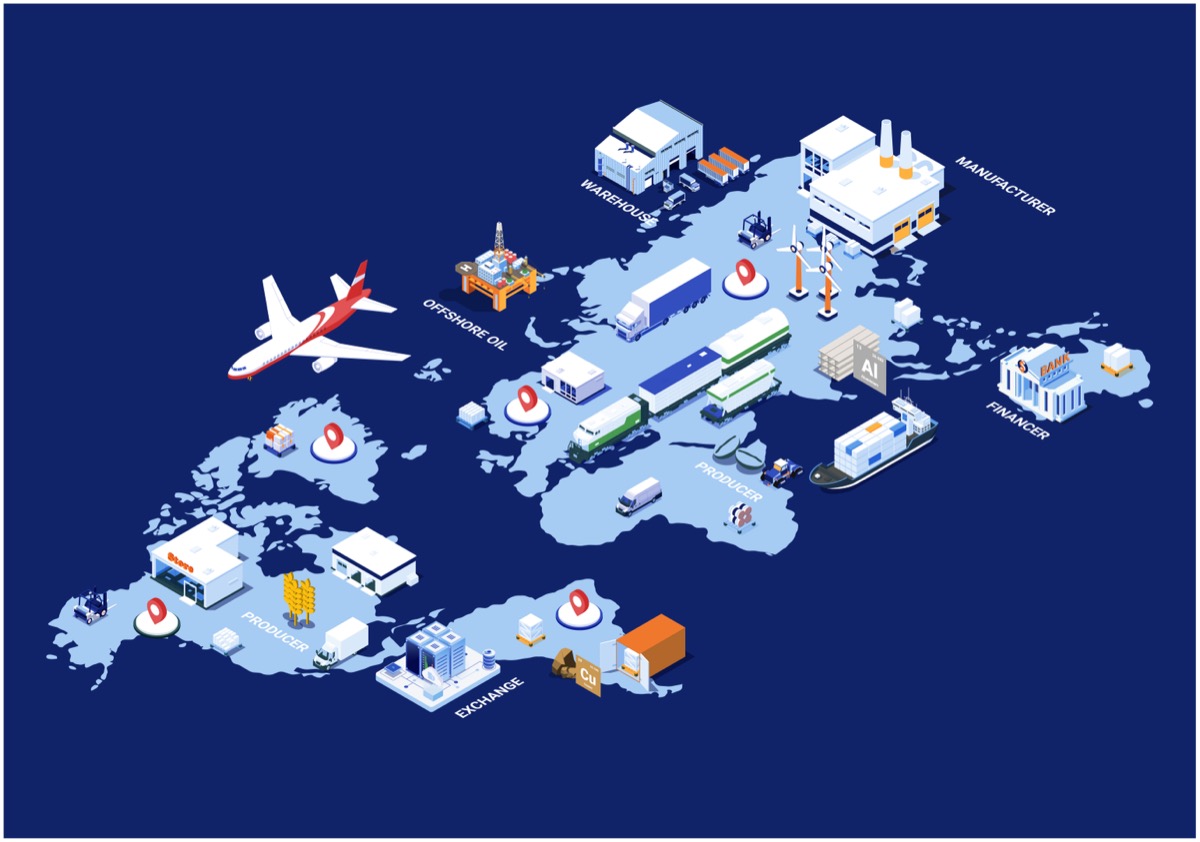
HMRC's Customs Declaration Service handled 280 million declarations in 2023, making software choice critical for UK importers and exporters. Yet most companies still operate with fragmented systems that increase processing time by 60-70% compared to integrated platforms.
Quadmet PTE Ltd, a UK-Singapore metals trader, cut their customs documentation from 22 to 8 documents per trade — a 65% reduction — after switching to integrated customs declaration software. Their shipment preparation time dropped 70%, from 12 hours to 3.5 hours per consignment.
The UK CDS Performance Reality
The UK's Customs Declaration Service replaced CHIEF in 2023, requiring all traders to adapt their declaration processes. While CDS improved HMRC's processing capability, the software layer between traders and CDS determines actual efficiency.
Most mid-market traders (£10M-£200M revenue) operate with:
- Manual Excel templates for commodity codes
- Separate freight forwarding systems
- Standalone customs broker software
- Disconnected trade finance platforms
This fragmentation creates compounding delays. A typical furniture importer might spend 4 hours preparing documents across three systems for a single container. Multiply that by 50 containers monthly, and you're looking at 200 hours of manual work that integrated software could reduce to 60 hours.
Software Architecture That Actually Performs
Effective UK CDS customs declaration software requires three technical foundations:
API Integration with CDS: Direct connection to HMRC's messaging system, not screen-scraping or manual uploads. Systems like tradePhlo maintain real-time CDS connectivity, enabling instant status updates and error handling.
Commodity Code Intelligence: Automated HS code classification using machine learning. Manual classification averages 15 minutes per line item. AI-powered classification reduces this to under 2 minutes with 94% accuracy rates.
Trade Agreement Optimization: Built-in FTA preference calculation. UK traders miss approximately 15% of available duty savings by not optimizing for agreements like UK-EU TCA, CPTPP, or bilateral deals with Japan and Australia.
Origin Commodities scaled from 50 to 8,000 containers annually using integrated trade management software. Their contract creation time dropped from 4-5 hours to 30 minutes, while maintaining compliance across 10 countries.
TCO Analysis: Integrated vs. Point Solutions
Most companies evaluate customs software in isolation, missing the total cost picture. Here's a realistic comparison for a £50M revenue commodity trader:
Point Solutions Approach:
- Customs software: £24K annually
- Trade finance platform: £36K annually
- Logistics management: £18K annually
- Manual integration overhead: £45K annually
- Total: £123K annually
Integrated Platform Approach:
- Full trade lifecycle platform: £75K annually
- Implementation and training: £15K one-time
- Integration overhead: £0 (native connectivity)
- Total Year 1: £90K
- Ongoing: £75K annually
The integrated approach delivers 39% lower costs, but more importantly, eliminates data silos that cause compliance errors and operational delays.
Compliance Requirements Beyond Basic Declarations
UK CDS software must handle more than basic customs entries. Post-Brexit compliance includes:
Rules of Origin Documentation: UK-EU trade requires detailed origin calculations. A furniture manufacturer importing oak from Germany needs to prove sufficient EU processing for preferential treatment. This requires tracking supplier declarations, processing calculations, and maintaining audit trails.
Safety and Security Declarations: Entry Summary Declarations (ENS) for goods entering UK ports. Late or incorrect filings trigger physical examinations, adding 2-5 days to clearance times.
Duty Deferment Integration: Electronic submission of deferment account payments. Manual reconciliation adds 3-4 hours monthly per account. Automated systems reduce this to minutes.
Chocomac Ghana, processing 60,000 metric tons of cocoa annually, achieved 45% operational efficiency improvements by implementing integrated trade management that handles customs, logistics, and compliance in a single platform.
Real-World Implementation Results
The gap between software marketing claims and actual performance is substantial. Here's verified data from UK traders:
MacConnal-Mason (specialty commodities): 75% cost reduction in trade processing operations after implementing integrated software versus maintaining separate customs, logistics, and finance systems.
EstoLink (Northern European trader): 70% cost reduction and 50% efficiency improvement by consolidating customs declarations, contract management, and logistics tracking.
Multi-location operations: Companies trading across multiple UK ports (Felixstowe, Southampton, Liverpool) report 35% faster processing when using software with native CDS integration versus broker-dependent solutions.
Making the Software Decision
Most customs declaration software evaluations focus on feature checklists rather than business impact. The critical questions are:
- Integration scope: Does the software handle your complete trade cycle, or just customs entries?
- Scalability proof: Can you verify performance at your target transaction volume?
- Compliance coverage: Beyond CDS, does it handle your specific trade agreement requirements?
- ROI timeline: How quickly will efficiency gains offset switching costs?
Phlo Systems' tradePhlo customers average £330K annual savings versus legacy systems, with 4-month average deployment times. The key is evaluating total trade management efficiency, not just customs declaration speed.
The UK customs software market will consolidate around platforms that deliver measurable ROI through integrated trade management, not point solutions that address customs in isolation. Companies still evaluating separate systems for customs, logistics, and trade finance are optimizing for yesterday's operational model.
Want to learn more about Phlo Systems?
See how our platform digitises international trade for commodity traders, importers, and exporters.
Get Started