Commodity Trade Finance Platform: What CFOs Actually Need
Most commodity traders lose 15-25% of working capital to inefficient trade finance cycles. Here's what a purpose-built platform actually solves—and what it doesn't.
The average commodity trade finance cycle runs 38 days from contract execution to final settlement. For a mid-sized trading house processing 200 trades a month, that timeline translates directly into trapped working capital—often seven figures sitting idle while counterparties, banks, and logistics providers exchange documents that could have been automated years ago.
The question worth asking isn't whether you need a commodity trade finance platform. At any scale above £20M in annual throughput, you do. The real question is whether the platform you're evaluating was actually built for trade finance, or whether it's a generic treasury system with a commodity skin painted over it.
There's a significant difference. And it costs money.
What 'Trade Finance Platform' Actually Means in a Commodity Context
Trade finance in commodities isn't just letters of credit and bank guarantees. It encompasses the full credit lifecycle: counterparty exposure from contract to delivery, FX exposure across multiple currencies and entities, working capital facilities tied to inventory positions, and documentary compliance that satisfies both lenders and customs authorities simultaneously.
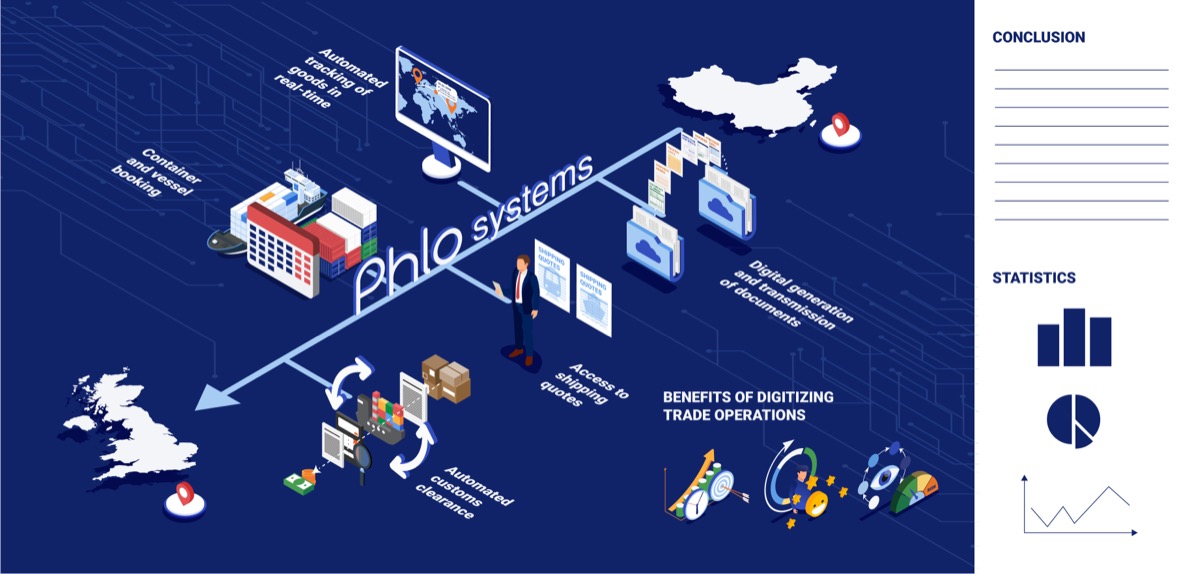
Generic ERP finance modules—and even some specialist treasury systems—handle the accounting layer reasonably well. What they consistently fail at is the operational integration: the moment where a contract amendment in your CTRM should automatically cascade into updated LC terms, revised margin calls, and amended shipping instructions, all without a human manually rekeying data across four systems.
That failure is measurable. Quadmet PTE Ltd, a UK-Singapore metals trader, found that before implementing an integrated platform, each shipment required managing 22 separate documents and took 12 hours of administrative preparation. After moving to a purpose-built trade management stack, document count dropped to 8 and prep time to 3.5 hours—a 70% reduction. That's not a technology story. That's a working capital story: fewer hours means faster cycles, and faster cycles mean lower DSO.
The Working Capital Maths That Most CFOs Miss
Here's a calculation worth running before your next system evaluation meeting.
If your trading house processes £100M annually across 300 trades, and your average trade cycle is 35 days, you have approximately £9.6M in working capital tied up in the pipeline at any given moment. Reduce that cycle by 10 days through automation—realistic for firms moving from manual documentary processes to integrated platforms—and you free up roughly £2.7M in liquidity. Against a typical trade finance facility cost of 4-6%, that's £110,000-£165,000 in annual financing cost savings, before you touch headcount or error reduction.
This is why the CFO conversation about commodity trade finance platforms shouldn't start with features. It should start with DSO, facility utilisation, and the cost of your current document error rate.
The industry average error rate on trade finance documentation runs between 50-80% on first presentation, according to ICC Banking Commission data. Each discrepancy adds 5-7 days to settlement. For a firm doing 300 trades a year, even modest improvement here compounds quickly.
Where Purpose-Built Platforms Diverge from Legacy Systems
The established names in commodity trading systems—ION Trading, Triple Point, Brady PLC—have substantial installed bases and genuine capabilities in price risk management and CTRM functionality. What they share is a cost structure that reflects their heritage: enterprise deployments running to seven-figure licence and implementation fees, 12-18 month go-live timelines, and annual maintenance costs that scale with complexity rather than usage.
For trading houses in the £10M-£500M revenue range, this creates a practical problem. You need sophisticated trade finance workflow management, but the legacy system economics assume you're a major bank or a top-20 commodity house with an IT department to match.
The total cost of ownership gap is substantial. Phlo Systems' finPhlo platform, for instance, operates at 93% lower TCO compared to ION Trading, Triple Point, and Brady PLC deployments—a figure that reflects both licensing economics and deployment time, which averages 4 months versus the 12-18 months typical for legacy implementations. Across 80+ deployments in 52 countries, the average annual saving versus legacy CTRM systems runs to £330,000 per customer.
Those numbers aren't primarily a technology argument. They're a capital allocation argument. The £200,000-£400,000 you're not spending on legacy system maintenance is capital you can deploy into trading positions.
The Facility Lifecycle Problem Nobody Talks About Enough
One of the most underappreciated inefficiencies in commodity trade finance isn't documentation or DSO—it's facility creation and management. Setting up a new credit facility, whether with a bank or an NBFI, involves document assembly, compliance checks, counterparty verification, and legal review that most trading houses still manage through a combination of email threads and spreadsheets.
For Easy Access Trading (EAT), a Brazilian agribusiness and trade finance firm, facility creation was taking one week per facility before they moved to a dedicated trade finance platform. After implementation, that dropped to four hours. The firm also reclaimed 40 hours per month previously spent on bank communications—time that translated directly into a 15% revenue increase without expanding headcount.
That's the operational leverage point that often gets lost in platform evaluations focused on feature lists: the question isn't just what the system can do, but what it stops your team from having to do manually.
For CFOs specifically, the more important metric is credit exposure visibility. In a manual environment, knowing your real-time counterparty exposure across all open trades, facilities, and FX positions typically requires someone to build it in Excel once a week. By which point, it's already wrong. A properly integrated commodity trade finance platform surfaces this continuously—which matters enormously when you're managing concentration risk across multiple counterparties in volatile markets.
What to Actually Evaluate (a Practical Framework)
When you're assessing platforms, five questions cut through the feature noise:
1. How does it handle multi-entity, multi-currency operations? Most commodity trading houses above £50M revenue operate across multiple legal entities and currencies. The platform needs to consolidate exposure and working capital positions across all of them in real time, not through a nightly batch process. Ask vendors to demonstrate a live multi-entity P&L and credit exposure view.
2. What's the integration depth with your CTRM or ERP? Trade finance that operates as a standalone module—disconnected from contract management and logistics—just creates a more expensive version of your current spreadsheet problem. The value is in bidirectional data flow: a contract amendment that automatically updates facility utilisation and triggers compliance checks. Require a technical integration demonstration, not a slide deck.
3. How are LC and guarantee workflows managed? Letters of credit remain the dominant instrument in physical commodity trade, and their management is where most platforms either earn or lose their keep. Look for automated discrepancy detection, SWIFT messaging integration (MT700 series), and a clear audit trail that satisfies both UCP 600 requirements and your lenders' documentation standards.
4. What's the compliance architecture? Regulatory requirements in trade finance are not static. AML obligations under the EU's AMLD6, UK sanctions compliance post-Brexit, and US OFAC screening requirements all intersect in commodity trade finance. The platform needs to embed compliance checks into transaction workflows, not bolt them on as a separate module.
5. What does deployment actually look like? Ask for a reference call with a client of similar size and complexity who went live in the last 18 months. Ask them specifically about data migration, the first 90 days of live operations, and what broke. This is more useful than any demo.
The Integration Imperative
The direction of travel in this market is clear: standalone trade finance platforms are giving way to integrated suites where operations, finance, and compliance share a single data model. The efficiency gains documented above—Quadmet's 70% reduction in prep time, EAT's 15% revenue growth, Torq Commodities scaling from 50 to 8,000 containers per year on the same platform—all come from integration depth, not from any single feature.
The commodity trade finance platforms that will matter in three years are those that connect contract origination, logistics execution, documentary compliance, and financial settlement into a continuous workflow—eliminating the rekeying, the email threads, and the spreadsheet reconciliations that currently consume 40+ hours per month in firms that haven't yet made the transition.
For CFOs evaluating options now: the technology is mature, the economics are favourable at mid-market scale, and the cost of delay is measurable in working capital terms. The firms that moved earliest on integrated trade finance platforms aren't just running more efficiently—they're using the freed-up capital and management bandwidth to trade more, and trade better.
Want to learn more about Phlo Systems?
See how our platform digitises international trade for commodity traders, importers, and exporters.
Get Started