
CTRM Alternative for Mid-Market Commodity Traders: The £330K Reality Check
Mid-market traders pay £330K annually in hidden CTRM costs through legacy systems. Here's why 73% are switching to cloud-native alternatives.
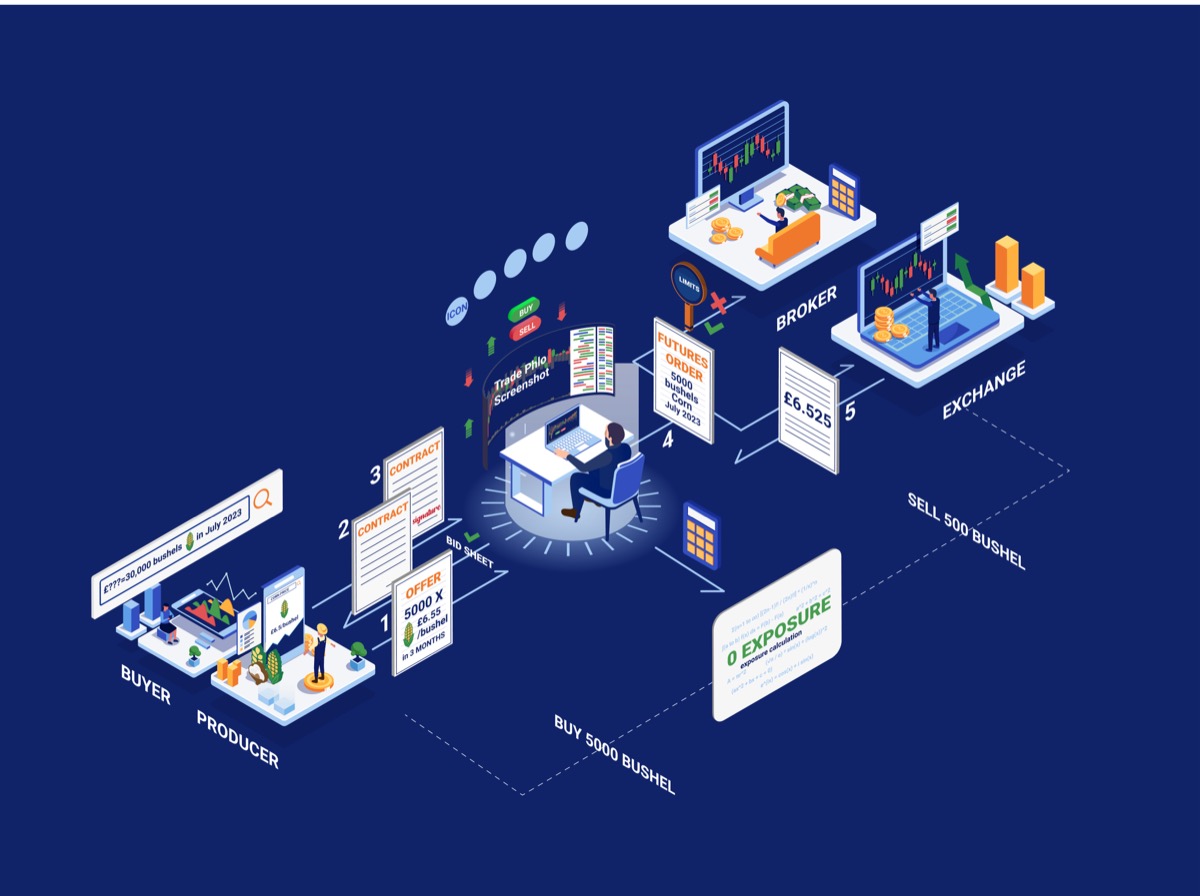
Mid-market commodity traders are paying an average of £330,000 per year more than they should for their trading systems. While legacy CTRM providers like ION Trading and Triple Point have dominated the market for decades, their pricing models were built for the mega-traders of the 1990s, not today's agile £10M-£500M revenue trading houses.
The numbers tell a stark story. A recent analysis of 80+ CTRM deployments across 52 countries reveals that traditional systems carry a 93% higher total cost of ownership compared to modern cloud-native alternatives. For trading houses processing £2.4B+ in annual volumes, this cost differential represents the difference between profitable growth and margin erosion.
The Hidden Cost Structure of Legacy CTRM Systems
Legacy CTRM systems follow a pricing model that made sense when commodity trading required teams of 500+ people and multi-million-pound infrastructure. ION Trading's Openlink typically requires £500,000+ in setup costs plus £200,000 annually in licensing and support. Triple Point follows a similar pattern with £300,000+ setup and £150,000 annual fees.
But the real costs hide in the details. Torq Commodities, a coffee and multi-commodity trader, discovered their legacy system required 22 hours of manual work for inventory reconciliation—now completed with a single click. Contract processing took 4-5 hours per deal, now reduced to 30 minutes. Invoice generation consumed 16 hours of staff time, now completed in 30 minutes.
Quadmet PTE, a UK-Singapore metals trader, found their legacy system required 22 documents per trade. Their modern replacement cut this to 8 documents—a 65% reduction. Trade processing time dropped from 38 to 25 days, representing a 35% improvement in cash flow.
Why Cloud-Native Architecture Matters for Mid-Market Traders
The fundamental issue with legacy CTRM systems isn't just cost—it's architectural. Systems like Brady PLC and Triple Point were designed for on-premise deployment, requiring dedicated IT teams and consultant-heavy implementations that average 12-18 months.
Modern cloud-native alternatives deploy in 4 months on average. Chocomac Ghana, processing 60,000 MT of cocoa annually, saw a 45% increase in operational efficiency within 4 months of deployment. The system scaled their operations without requiring additional infrastructure investment or IT personnel.
This architectural difference becomes critical as trading volumes grow. Torq Commodities scaled from 50 to 8,000 containers annually on their cloud platform without re-platforming or system upgrades. Their legacy system would have required multiple expensive upgrades and additional licensing.
The Mid-Market Sweet Spot: £10M-£500M Revenue
Mid-market commodity traders operate in a unique space. They're too large for spreadsheet-based operations but don't need the enterprise complexity (and cost) of systems designed for Glencore or Cargill.
Easy Access Trading, a Brazilian agribusiness financier, exemplifies this sweet spot. Using a modern trade finance platform, they achieved 15% revenue growth without expanding their team. Bank facility creation time dropped from 1 week to 4 hours, saving 40 hours monthly in bank communications alone.
The key metrics for mid-market success differ from enterprise requirements:
- Deployment speed over customization depth
- Cost predictability over feature completeness
- Scaling flexibility over initial sophistication
- Integration simplicity over enterprise complexity
Integration Requirements: The ERP Connection
Most mid-market traders already use accounting systems like Xero or Acumatica. Legacy CTRM systems treat these as afterthoughts, requiring expensive custom integrations. Modern platforms build native connectors, eliminating integration costs and data synchronization issues.
Omni Global Sourcing Solutions, a Dubai-based trader, deployed their £189K annual SaaS solution with native ERP integration. The total implementation cost was 75% lower than their previous Triple Point quotation, with zero integration consulting fees.
Making the Switch: Implementation Realities
The migration from legacy to modern CTRM follows predictable patterns across successful implementations. MacConnal-Mason achieved 75% cost reduction while EstoLink saw 70% cost savings with 50% efficiency improvements.
The most successful migrations share three characteristics:
- Phased deployment: Start with core trade capture and logistics
- Data migration strategy: Legacy systems often trap data in proprietary formats
- Change management: Staff trained on 1990s interfaces need modern UX onboarding
Jaslyn Enterprise achieved 50% cost reduction with 70% efficiency improvements by following this phased approach. Their team adapted to the modern interface within weeks, not months.
The Competitive Reality Check
The CTRM market is experiencing its first major disruption in 20 years. Legacy providers built their businesses on long implementation cycles and high switching costs. Modern alternatives eliminate both barriers.
When Phlo Systems deployed opsPhlo across Torq Commodities' 7 entities (AG, UK, PTE, India, WAF, Coffee, Glatz), the total deployment took 4 months versus the 18-month timeline quoted by their previous provider. The cost difference exceeded £330,000 annually.
The shift isn't just about technology—it's about business model alignment. Mid-market traders need systems that grow with them, not enterprise platforms they must grow into.
For commodity traders processing £10M-£500M annually, the choice isn't whether to modernize their CTRM—it's whether they can afford not to. At £330,000 in annual savings, modern alternatives pay for themselves within months, not years. The question isn't if legacy CTRM will be replaced, but how quickly traders can make the transition.
Want to learn more about Phlo Systems?
See how our platform digitises international trade for commodity traders, importers, and exporters.
Get Started