Grain Trading IT Architecture: How Wheat, Corn and Soybean Merchants Connect ERP, CTRM, and Logistics
A grain trading IT architecture has three jobs: capture every deal once, expose a real-time position across cash and futures, and turn the position into a P&L that survives statutory audit. Wheat, cor
Grain Trading IT Architecture: How Wheat, Corn and Soybean Merchants Connect ERP, CTRM, and Logistics
A grain trading IT architecture has three jobs: capture every deal once, expose a real-time position across cash and futures, and turn the position into a P&L that survives statutory audit. Wheat, corn, and soybean merchants struggle with this because the deal lifecycle spans 3–18 months, the price changes between contract and shipment, the quality changes between origin and destination, and the regulatory regime differs in every port. This article maps the reference architecture, the data flows that matter, and where the typical mid-market grain merchant loses money to system gaps.
The deal lifecycle as a data flow
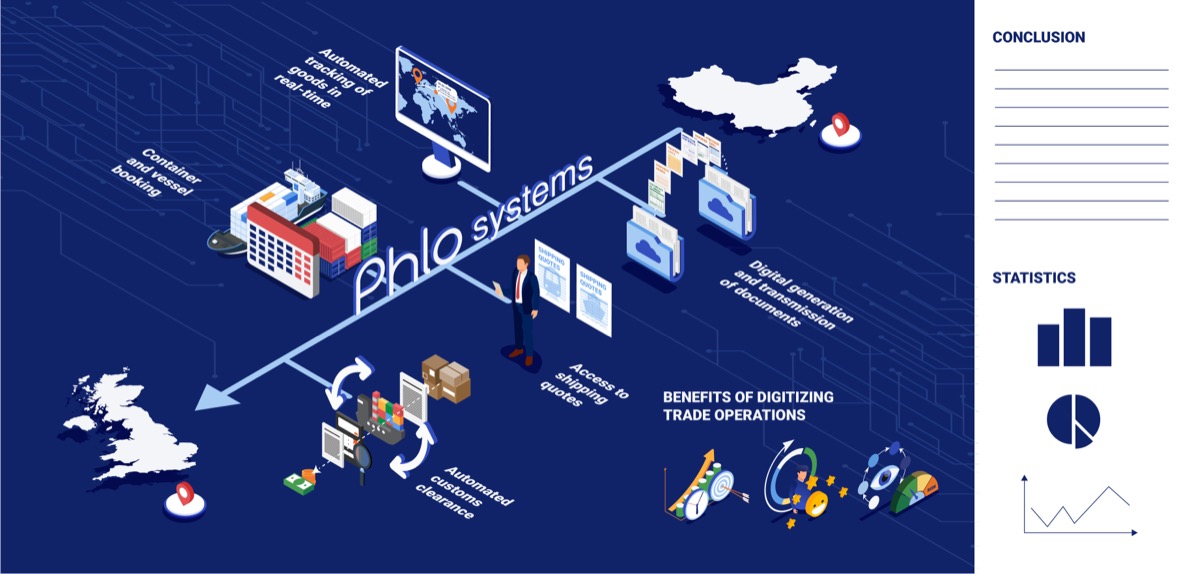
A typical export grain deal moves through 14 distinct system events:
- Broker confirmation arrives (email, IM, voice).
- Deal captured in CTRM with counterparty, commodity, contract terms.
- Sanctions and KYC check on counterparty.
- Counterparty credit-limit check; deal blocked if breach.
- Futures hedge placed (CME, MATIF, Euronext, MGEX), tagged to the deal.
- Logistics planning: origin elevator allocation, vessel nomination, freight booking.
- Pricing event(s): customer fixes futures, or seller-call gives final price.
- Loadport quality (independent surveyor) — assay, weight, FFA, protein.
- Bill of lading issued; ownership transfer per Incoterm.
- Documentary credit / LC presentation or open-account invoicing.
- Discharge port quality (often disputes here).
- Demurrage and despatch claim on both ends.
- Final invoice with quality adjustments.
- Hedge release, P&L crystallised, sub-ledger posting to ERP.
Every step is a data event. A well-architected grain trader treats each event as a structured record, not an email. A poorly-architected one re-keys data five times.
The reference architecture
A modern grain trading reference architecture has five domains:
┌────────────────────────────────────────────────────────────┐
│            DEAL & POSITION DOMAIN (CTRM core)              │
│  Counterparty | Contracts | Positions | MTM | Hedges       │
└─────────────┬──────────────────────────────────┬───────────┘
              │                                  │
┌─────────────▼──────────┐         ┌─────────────▼───────────┐
│   PHYSICAL DOMAIN      │         │   FINANCIAL DOMAIN      │
│  Vessels | Laytime     │         │   GL | AP/AR | FX       │
│  Elevators | Quality   │         │   Hedge accounting      │
│  Customs | Documents   │         │   Treasury | LCs        │
└─────────────┬──────────┘         └─────────────┬───────────┘
              │                                  │
              └────────────┬─────────────────────┘
                           │
              ┌────────────▼────────────┐
              │   ANALYTICS DOMAIN      │
              │   Margin | Exposure     │
              │   Regulatory reports    │
              └─────────────────────────┘
The two domains that most often fail mid-market grain merchants are the physical domain (which the ERP was not built for and the CTRM treats as an afterthought) and the hedge-accounting boundary between the deal domain and the financial domain.
The five data flows that matter
1. Deal → Position → MTM
The deal-capture event must update the position in real time. A 25,000 mt corn export at CBOT Dec24 +35 cents/bu, priced 50% over Oct 1–15 and 50% over Oct 16–31, generates: one physical short position of 25,000 mt; a long futures hedge of ~197 contracts (25,000 mt ≈ 984,200 bu at ~5,000 bu/contract); and a basis exposure of +35 cents/bu over the pricing window. The CTRM must track all three. A spreadsheet cannot.
2. Hedge designation → Effectiveness → OCI release
For IFRS 9 / ASC 815 cash-flow hedge accounting, the firm must document hedge designation, prove ongoing effectiveness (typically dollar-offset or regression), recycle OCI to P&L on delivery, and disclose ineffectiveness in financial statements. A bolt-on Excel hedge log is the most common audit finding in this area.
3. Quality → Pricing → Invoice
Loadport quality determines provisional pricing; discharge quality determines final settlement. For wheat: protein +/- scale, falling number adjustment, test weight discount, dockage. For soybeans: protein/oil schedule, FFA, splits. The quality result must flow from the lab certificate into the contract record, into the pricing calculation, into the invoice, automatically. Manual re-keying produces credit notes that erode margin.
4. Vessel → Laytime → Demurrage
The vessel nomination, NOR (notice of readiness), statement of facts (loading commenced, suspended, resumed, completed), laytime allowed under charter party, demurrage rate, and despatch terms must all be captured. A 30,000 mt cargo at $25,000/day demurrage with 2 days laytime overshoot is $50,000 — material on a $50–80/mt cargo margin. The system must accrue demurrage to the GL on the same day the statement of facts is signed, not three weeks later when the invoice arrives.
5. Customs → Origin → Destination
Origin documents (certificate of origin, phytosanitary, fumigation), destination customs filings (export and import), preference declarations under FTAs (UK-Australia, EU-Mercosur, USMCA, RCEP), sanctions screening on cargo destinations (Russia origin, Iran destinations, OFAC concerns). The customs domain has its own data model and its own regulators; the most common architectural mistake is treating it as a document repository instead of a structured trade-compliance record.
Where mid-market grain merchants lose money
From observed deployments and post-implementation reviews at £30m–£400m turnover grain houses, the recurring leak points:
| Leak point | Typical annual cost | Root cause |
|---|---|---|
| Demurrage overrun unbilled or under-claimed | £50k–£400k | Statement of facts in email, not system |
| Quality disputes / credit notes | £80k–£500k | Lab certificate manually re-entered |
| Hedge slippage from position errors | £30k–£300k | Position update lags deal capture |
| Sanctions / KYC near-misses | Reputational + £20k–£100k legal | Screening at month-end, not deal entry |
| Customs duty over-paid (no FTA claim) | £20k–£200k | Origin rules not checked at deal capture |
| Manual journal entries / restatements | £40k–£150k staff cost | CTRM-to-ERP sub-ledger missing |
Across these six items, the typical £50m–£200m turnover grain trader loses 1.5%–3.0% of gross margin — money that does not show up on a budget line because it is spread across dozens of small events.
opsPhlo's architectural answer
opsPhlo collapses the deal, physical, and financial domains into a single platform with one counterparty record, one position record, and one general ledger — purpose-built for £5m–£3bn turnover commodity traders. The customs and compliance domain integrates through tradePhlo Intelligence (51-country tariff and FTA coverage). The hedge-accounting boundary is wired in: designations, effectiveness, and OCI release run as native journal events, not bolt-on spreadsheets.
For grain merchants specifically:
- GAFTA, FOSFA, and NAEGA contract templates ship in the box.
- Loadport and discharge quality capture with protein, oil, FFA, moisture, FN, test-weight schedules.
- CBOT, MATIF, MGEX, Euronext futures integration for hedge management.
- Demurrage accrual from statement-of-facts ingest.
- Sanctions screening at deal entry against OFAC, OFSI, EU, UN lists.
The implementation pattern is to migrate the position, hedge, and physical layers first (8–10 weeks), then cut the general ledger over at a fiscal period boundary (additional 2–4 weeks). Total time to production: typically under 14 weeks.
Frequently Asked Questions
What is the difference between a grain trading system and a generic ERP?
A grain trading system models basis pricing (cash leg plus futures leg), quality differentials, hedge designations, GAFTA / FOSFA contracts, vessel laytime, and origin/destination compliance. A generic ERP models units bought and units sold at unit cost. The mismatch causes basis position errors, hedge-accounting non-compliance, demurrage leakage, and audit findings.
Do I need separate systems for cash trading and futures trading?
No. A modern CTRM captures both in one position record. The cash leg (physical contract) and the futures leg (exchange-traded hedge) are linked at deal entry and marked to market separately, with the spread (basis) tracked as its own exposure. Separating into two systems is the legacy approach — most grain trading errors trace back to it.
How do I integrate my elevator management system with my CTRM?
Most US grain elevators use AgVantage, AgWorks, Compass (Bushel), or Cultura. CTRM integration typically uses nightly batch file exchange for inventory, scale tickets, and patron contracts, with manual reconciliation at month-end. A small number of CTRMs (including opsPhlo) support API-level integration with the major elevator platforms for near-real-time inventory visibility.
What regulatory reports does a grain trader need to produce?
The reporting matrix depends on jurisdiction and trading activity. EMIR (EU): derivatives reporting. REMIT (EU): wholesale energy products. MiFID II (EU): position limits on commodity derivatives. CFTC (US): large-trader reporting and position limits. ESMA position reporting in EU. Tax filings: VAT/GST in EU and other jurisdictions, withholding taxes on cross-border payments. Hedge-accounting documentation under IFRS 9 or ASC 815 for audited financial statements.
Can opsPhlo integrate with my existing ERP?
Yes. opsPhlo can act as a CTRM with sub-ledger posting into SAP S/4HANA, NetSuite, Acumatica, Sage X3, or Dynamics 365 BC. It can also run as the standalone ERP for grain merchants who do not want a separate finance system — that path is the lower-TCO option for £5m–£500m turnover firms.
How does opsPhlo handle the wheat protein scale?
The protein scale is configured per contract: a milling wheat contract at GAFTA 100 with an 11.5% base protein at $/mt = X may carry +$0.50/mt per 0.1% above and −$1.00/mt per 0.1% below. opsPhlo applies the scale at lab certificate ingest, producing the adjusted invoice price automatically. Falling number, test weight, and dockage adjustments follow the same model.
Want to learn more about Phlo Systems?
See how our platform digitises international trade for commodity traders, importers, and exporters.
Get Started