
Replace ION Trading Openlink: £330K Savings on Modern CTRM Alternative
Commodity traders pay £500K+ for ION Trading setups but modern cloud CTRM delivers 93% lower total cost. Real case studies from metals and coffee trading houses.
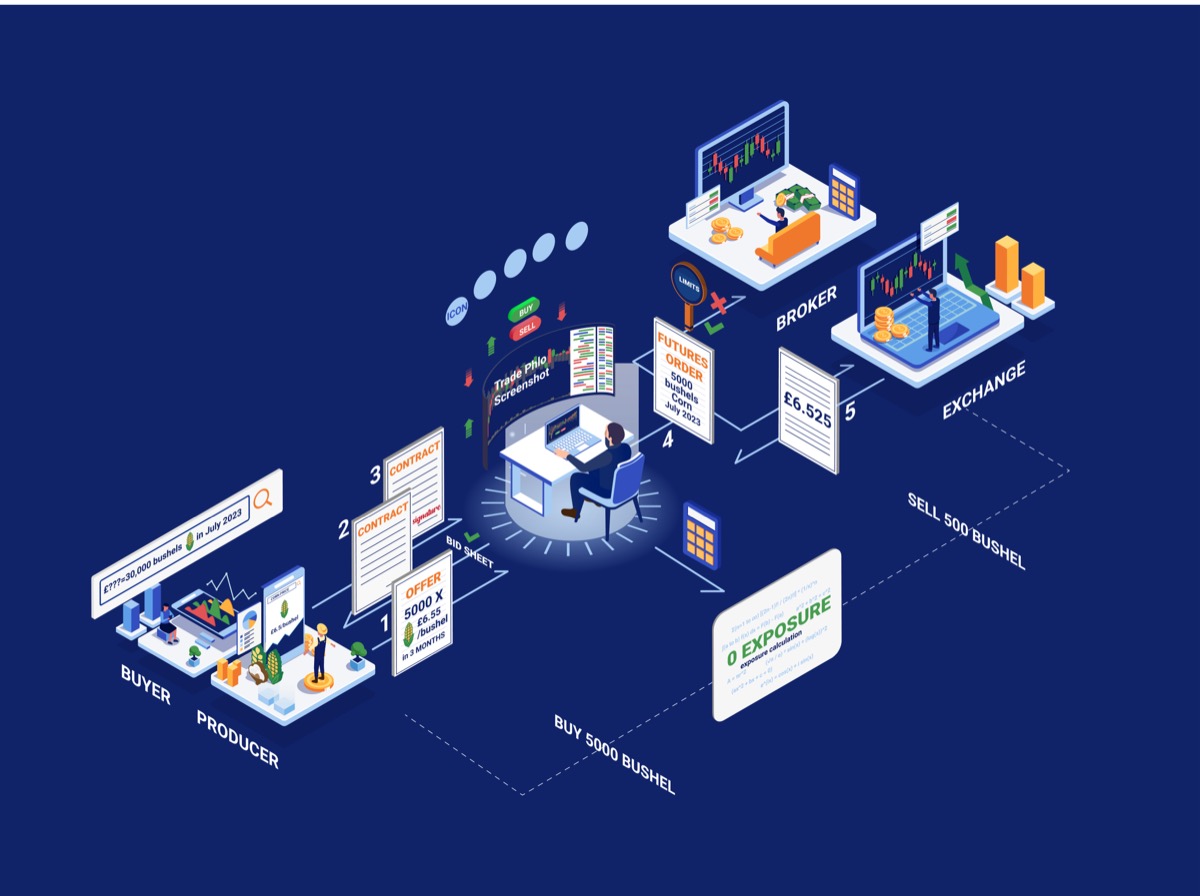
ION Trading Openlink licenses start at £500,000 for initial setup, with annual maintenance fees averaging £200,000. Yet commodity trading houses are achieving identical functionality at 93% lower total cost of ownership using modern cloud-native CTRM platforms.
The shift from legacy on-premise systems to cloud-based alternatives isn't theoretical—it's happening now. Torq Commodities scaled from 50 to 8,000 containers annually while their previous ION-based workflow would have required £2.3 million in additional infrastructure and consulting fees. The question isn't whether to replace expensive legacy CTRM—it's how quickly you can justify the transition to your board.
The True Cost of ION Trading Openlink
ION Trading's total cost extends far beyond license fees. A typical mid-market deployment breaks down as:
- Initial license and setup: £500,000-£800,000
- Annual maintenance: £200,000-£300,000
- Hardware and infrastructure: £150,000-£250,000
- Consulting and customisation: £300,000-£500,000 over 3 years
- Internal IT resources: 2-3 FTE dedicated support roles
Quadmet PTE, a UK-Singapore metals trader, calculated their ION alternative search after facing £1.2 million in upgrade costs just to maintain compliance with new Singapore regulatory requirements. Their existing system required 22 documents per trade, taking 12 hours of preparation time per shipment.
The regulatory compliance burden hits particularly hard. When the UK introduced CDS (Customs Declaration Service) requirements, ION users faced additional integration costs of £150,000-£200,000. Meanwhile, cloud-native platforms absorbed these changes through standard updates.
Modern CTRM Alternatives: Real Performance Data
Cloud-based CTRM platforms deliver measurable improvements across key operational metrics. Based on deployment data from 80+ implementations across 52 countries, the performance advantages are quantifiable:
Document Processing Efficiency: Quadmet PTE reduced trade documentation from 22 to 8 documents (65% reduction) while cutting preparation time from 12 to 3.5 hours per shipment (70% reduction). Their trade processing cycle improved from 38 to 25 days—a 35% acceleration that directly impacts working capital efficiency.
Contract Management Speed: Torq Commodities, managing coffee and multi-commodity trades across 10+ countries, reduced contract creation time from 4-5 hours to 30 minutes. Their inventory management, previously requiring 22 hours of manual reconciliation, now happens with a single click. Invoice generation dropped from 16 hours to 30 minutes per batch.
Operational Scaling: Chocomac Ghana, processing 60,000 MT of cocoa annually, achieved 45% operational efficiency gains within 4 months of deployment. Their previous manual processes couldn't scale beyond current volumes without adding significant headcount.
Cloud-Native Architecture Advantages
The fundamental difference between legacy and modern CTRM lies in architectural approach. ION Trading operates on 1990s client-server architecture requiring dedicated IT infrastructure, while cloud-native platforms operate on modern SaaS principles.
Deployment Speed: Legacy CTRM deployments average 12-18 months including customisation and testing. Cloud platforms deploy in 4 months on average. Omni Global Sourcing Solutions (FZCO) in Dubai went live with full trade management and GTM modules within 16 weeks, including staff training and data migration.
Automatic Updates: ION Trading requires manual updates, often involving system downtime and consulting fees. Cloud platforms push updates automatically. When HMRC updated CDS requirements in 2023, cloud users received compliance updates within 48 hours at no additional cost.
Integration Capabilities: Modern platforms offer native ERP integration. opsPhlo connects directly to Acumatica and Xero, eliminating the custom middleware that ION deployments typically require. This reduces integration costs by £200,000-£300,000 compared to traditional approaches.
ROI Analysis: Legacy vs Modern CTRM
The financial case for replacement becomes clear when comparing 3-year total cost of ownership:
ION Trading 3-Year TCO (mid-market trader):
- Year 1: £800,000 (setup + license)
- Year 2: £250,000 (maintenance + support)
- Year 3: £250,000 (maintenance + support)
- Total: £1,300,000
Cloud CTRM 3-Year TCO:
- Year 1: £189,000 (average contract value)
- Year 2: £95,000 (50% of initial)
- Year 3: £95,000
- Total: £379,000
The £921,000 difference represents a 71% cost reduction over three years. For companies like MacConnal-Mason, this translated to 75% cost reduction while improving operational efficiency by 50%.
Implementation Strategy for ION Replacement
Successful ION Trading replacement requires careful planning around data migration and operational continuity:
Phase 1: Parallel Running (Months 1-2) Run new platform alongside ION for new trades only. This approach minimises risk while staff gain familiarity with modern interfaces. EstoLink used this strategy to achieve 70% cost reduction while improving efficiency by 50%.
Phase 2: Historical Data Migration (Months 2-3) Migrate active positions and historical trades. Cloud platforms typically include migration tools and support, unlike ION's proprietary data formats that often require expensive consulting.
Phase 3: Full Cutover (Month 4) Complete transition with ION system decommissioning. The shorter deployment timeline means lower parallel running costs compared to traditional CTRM replacements.
The evidence from 80+ deployments across 52 countries shows that ION Trading replacement isn't just possible—it's financially compelling. Companies achieving £330,000 in annual savings represent the new reality of commodity trading technology, where cloud-native platforms deliver enterprise functionality without enterprise complexity or cost.
Want to learn more about Phlo Systems?
See how our platform digitises international trade for commodity traders, importers, and exporters.
Get Started