
Trade Management ERP for Importers and Exporters: What Actually Works
Fragmented trade systems cost mid-market importers and exporters an average of £330K annually. Here's what a purpose-built trade management ERP actually fixes—and what it doesn't.
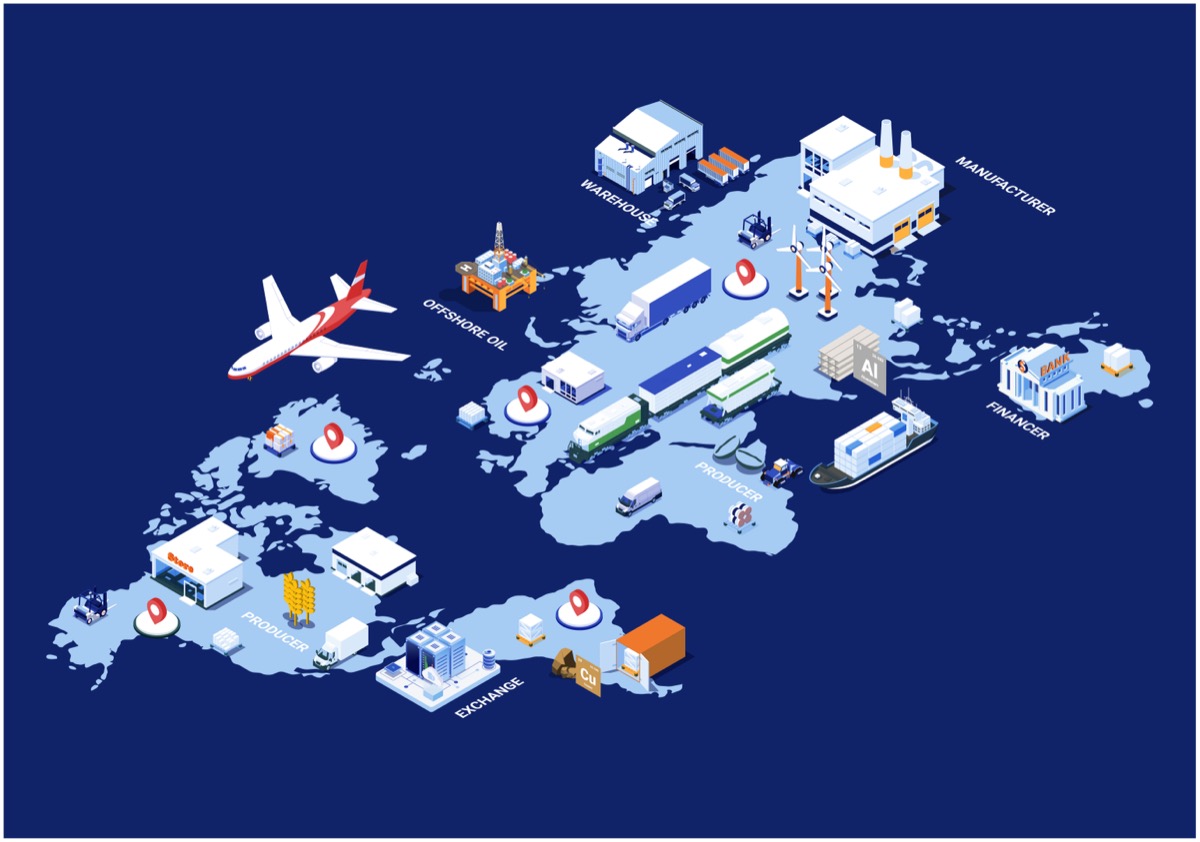
The average mid-market trading company runs trade operations across 4 to 7 separate systems—a spreadsheet for contracts, a TMS for logistics, an accounting package for invoicing, and whatever the compliance team cobbled together before the last audit. According to Gartner's global trade management research, fragmented system architectures are the single largest driver of manual error and compliance exposure in cross-border trade. That's not a technology problem. It's an organisational one that technology can solve—but only if you choose the right kind.
This article is for operations directors and compliance managers at importing and exporting businesses doing between £10M and £200M in annual trade who are evaluating whether a dedicated trade management ERP is worth the investment, the disruption, and the six-figure licence fees. The short answer is: it depends almost entirely on whether the system covers your full trade lifecycle or just part of it.
Why Generic ERP Fails at Cross-Border Trade
SAP and Oracle dominate the enterprise ERP market, and both have global trade management modules. SAP GTS (Global Trade Services) is the most widely deployed compliance-focused trade module in the world. But it was architected for Fortune 500 manufacturers with dedicated IT departments and 18-month implementation budgets. For a metals trader with 80 employees moving 2,000 shipments a year through 12 countries, SAP GTS is overkill in the wrong direction—expensive to implement, expensive to maintain, and built around manufacturing workflows rather than trading ones.
Oracle Trade Management has similar issues: deep functionality, but implementation timelines that routinely stretch to 12-18 months and total cost of ownership that puts it out of reach for companies below £200M revenue. Amber Road, now absorbed into E2open, is strong on compliance screening but was never designed as an end-to-end trade ERP—it handles one slice of the lifecycle, not the whole thing.
The practical consequence of these gaps is that mid-market importers and exporters either overspend on systems built for companies three times their size, or they underinvest and run trade operations on a patchwork of tools that don't talk to each other.
The Full Trade Lifecycle Problem
Here's the thing that most ERP vendors won't tell you: trade management isn't just logistics or just compliance or just finance. It's all three, sequentially and simultaneously, with every stage creating data that the next stage depends on.
A typical export transaction runs through: contract negotiation and execution, pricing and risk hedging, purchase orders and supplier management, freight booking and documentation, customs export declaration, letter of credit or trade finance activation, goods receipt and inspection at destination, import customs declaration, duty payment, final invoicing, and cash reconciliation. That's 10 distinct stages, each touching a different system in most mid-market trading companies.
The Quadmet case is instructive here. Quadmet PTE Ltd, a UK-Singapore metals trading firm, was processing each trade with 22 separate documents and spending 12 hours on documentation preparation per shipment. After deploying a unified trade management platform, they reduced documents per trade from 22 to 8—a 65% reduction—and cut preparation time from 12 hours to 3.5 hours per shipment. Trade processing cycle time dropped from 38 days to 25 days. These aren't efficiency statistics pulled from a vendor brochure; they reflect what happens when you eliminate the rekeying and reconciliation that fragmented systems force on operations teams.
Origin Commodities (now trading as part of the Torq Commodities group) offers an even more dramatic example. When the company scaled from 50 to 8,000 containers per year across 10 countries, contract processing time dropped from 4-5 hours to 30 minutes per contract. Inventory reconciliation, which previously took 22 hours, became effectively instant. Invoice processing fell from 16 hours to 30 minutes. The company grew from 10 to 400 people and from 1 to 10+ countries without the operational infrastructure collapsing under its own weight—which is exactly what happens to trading businesses that scale on fragmented systems.
What to Actually Evaluate in a Trade Management ERP
Most procurement processes for trade management software focus on the wrong things. Feature checklists and demo presentations obscure the three questions that actually determine whether a system will work for your business:
Does it cover your full trade lifecycle, or just part of it?
The test here is simple: map your current trade process from contract execution to final cash receipt. Count every system, spreadsheet, and manual intervention in that chain. Then ask the vendor to show you, live and unscripted, how their platform handles each step. If there are handoffs to external systems that require manual data entry, those are your future failure points.
What is the realistic total cost of ownership over 5 years?
Licence fees are the visible cost. The invisible costs are implementation (typically 1.5x to 3x annual licence for enterprise systems), customisation, internal IT resource, training, and the ongoing cost of system maintenance and upgrades. Phlo Systems, which provides the tradePhlo platform, publishes a 93% lower TCO comparison against ION Trading, Triple Point, and Brady PLC—the three dominant CTRM vendors in the commodity trading space. Whether or not that number applies to your specific configuration, it points to a real phenomenon: the total cost gap between modern cloud-native platforms and legacy enterprise systems is substantial, and almost always understated in initial procurement processes.
How long does implementation actually take?
The industry benchmark for legacy trade management implementation is 12 to 18 months. Modern cloud-native platforms regularly achieve live deployments in 4 months. That's not just a time saving; it's a risk reduction. Every month your operations team spends in parallel-running old and new systems is a month of double data entry, staff distraction, and delayed ROI. Both Quadmet and Chocomac Ghana (a cocoa processor handling 60,000 MT per year) achieved live deployment in 4 months—which is now an achievable baseline expectation for mid-market trading businesses, not an aspirational target.
Compliance Is Not a Module—It's Infrastructure
The compliance failure mode in trade management is predictable: companies treat customs and regulatory compliance as a bolt-on rather than an integrated part of the trade process. The result is that compliance data is always slightly behind operational reality, which creates two problems.
First, declarations get filed with incorrect or incomplete information because the compliance team is working from documents that don't reflect the final state of the shipment. UK HMRC processed 104 million customs declarations in the 12 months following Brexit, and compliance error rates in import declarations have been a persistent issue for trading businesses that didn't upgrade their systems after the UK left the EU's customs union in January 2021.
Second, duty optimisation—using free trade agreement preferential rates, correctly applying inward processing relief, claiming duty drawback—requires real-time access to the same data that operations is working with. When compliance operates in a separate system, FTA savings get missed because the classification and origin data isn't available at the point of declaration.
A properly integrated trade management ERP makes customs compliance a function of the contract and logistics data that already exists in the system, rather than a separate data entry exercise. The AI-driven tariff classification tools that now exist—customs-compliance.ai being one example in the UK market—can further reduce classification errors and identify duty savings that manual processes miss.
Practical Questions Before You Sign Anything
If you're in active evaluation of a trade management ERP, here are the questions that will tell you more than any demo:
Can you show me a live customer environment, not a demo sandbox? Reference customers who will take a call are a stronger signal than case studies.
What happens to my data if I cancel the contract? Data portability and export formats matter more than vendors acknowledge.
What is the user-to-licence ratio your existing customers run at? If the answer is high, the system probably requires heavy IT involvement to operate. If it's low, it's genuinely self-service.
What percentage of your implementation budget is professional services vs. software? A ratio above 2:1 is a warning sign that the system requires significant customisation to work.
What regulatory changes have you shipped in the last 12 months? Trade compliance regulations change constantly—UK CDS updates, EU CBAM requirements, new sanctions designations. A vendor that can't list specific compliance updates they've shipped is not staying current.
The Real ROI Calculation
The business case for a trade management ERP for importers and exporters comes down to four numbers: cost of manual labour in the current process, cost of compliance errors and delays, cost of missed duty optimisation, and cost of the new system.
On the cost side, the average mid-market trading business processing 500+ shipments per year spends between £150K and £400K per year on manual trade administration—document preparation, data entry, reconciliation, and compliance filing. Compliance errors cost an average of £8,000-£12,000 per error in re-work, penalties, and delayed shipment release. FTA duty savings that go unclaimed because of classification errors typically represent 2-5% of dutiable import value.
Against this, a modern trade management ERP deployed in 4 months at a TCO that's 80-90% below legacy alternatives changes the economics of the ROI calculation entirely. The £330K average annual saving per customer that Phlo Systems reports across its deployments isn't a marketing number pulled from a single outlier customer—it reflects what happens when you eliminate 65-75% of manual document handling and 40-60% of administration time across the full trade lifecycle.
The companies that get this wrong buy a system that solves one part of the problem—usually the compliance piece or the logistics piece—and find themselves 18 months later with the same fragmented architecture, just with a new system in the mix. The companies that get it right start from the full lifecycle and work backwards to the platform that covers it, rather than starting from the platform and hoping it covers the lifecycle.
For mid-market importers and exporters, the right trade management ERP is not the biggest name in the market. It's the one that covers contracts to customs to cash without the gaps—and that your operations team will actually use.
Want to learn more about Phlo Systems?
See how our platform digitises international trade for commodity traders, importers, and exporters.
Get Started