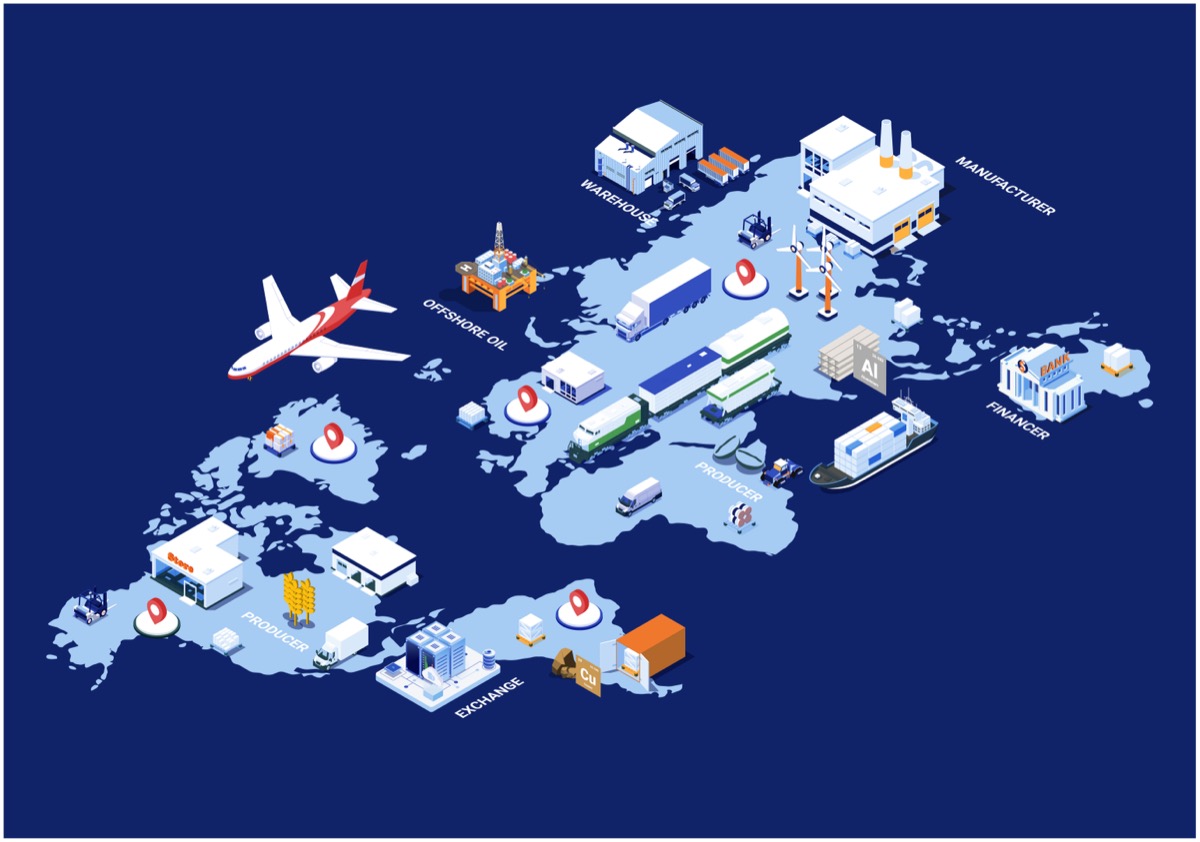
Trade Management ERP for Importers Exporters: The £330K Reality Check
Why companies trading across 5+ systems are losing £330K annually compared to integrated trade management ERP platforms. Real data from 80+ deployments across 52 countries.
A UK coffee trading house recently discovered they were spending 22 hours monthly just managing inventory across Excel spreadsheets, three different customs systems, and two separate invoicing platforms. After implementing an integrated trade management ERP, that same process now takes "the click of a button" — part of £330,000 in annual savings versus their previous fragmented approach.
This isn't an outlier. Across 80+ deployments spanning 52 countries, companies using fragmented trade management systems are systematically overpaying for basic operations that modern trade management ERP platforms handle seamlessly.
Why Traditional ERP Falls Short for Trade Operations
Standard ERP systems like SAP or Oracle weren't built for the complexities of international trade. A metals trader in Singapore discovered this when their Oracle implementation required 22 separate documents for each trade — until switching to a trade-specific ERP reduced this to just 8 documents, cutting preparation time by 70%.
The core problem: traditional ERP treats trade as an afterthought. You get accounting modules that understand domestic transactions, but struggle with:
- Multi-currency hedging positions
- Incoterms and risk transfer points
- Customs duty calculations across 180+ countries
- Trade finance documentation (letters of credit, bills of lading)
- Sanctions screening against OFAC, EU, and UN lists
Dubai-based Omni Global Sourcing Solutions learned this lesson when evaluating their $189,000 annual software spend. They needed a system that could handle global sourcing operations natively, not bolt-on modules that never quite integrated properly.
The Hidden Costs of Fragmented Trade Systems
Most mid-market importers and exporters run trade operations across 5-7 different systems: one for contracts, another for logistics tracking, a third for customs declarations, separate invoicing software, and spreadsheets filling the gaps.
The numbers are stark:
Document Processing: Companies using fragmented systems spend an average of 12 hours preparing each shipment for customs clearance. Integrated trade management ERP platforms reduce this to 3.5 hours — a 70% improvement that scales across hundreds or thousands of shipments annually.
Contract Management: Creating trade contracts in traditional systems averages 4-5 hours per contract. Modern trade management ERP cuts this to 30 minutes through automated templates, built-in Incoterms libraries, and integrated compliance checking.
Data Re-entry: The biggest hidden cost isn't software licenses — it's human time. A cocoa processor in Ghana calculated they were spending 45% of operational capacity on manual data entry between systems. Post-implementation, that capacity redirected to revenue-generating activities.
What Trade Management ERP Actually Delivers
The best trade management ERP platforms handle the complete trade lifecycle in a single system:
Pre-Trade: Contract templates with built-in Incoterms, automated sanctions screening, and real-time pricing feeds. This eliminates the back-and-forth between sales, compliance, and operations that typically adds 2-3 days to contract execution.
Trade Execution: Automated purchase order generation, logistics coordination with 3PL providers, and real-time shipment tracking. Brazilian agribusiness Easy Access Trading reduced facility creation time from one week to four hours using integrated trade finance modules.
Post-Trade: Automated customs declarations, duty optimization, invoice generation, and payment reconciliation. The coffee trader mentioned earlier now processes invoices in 30 minutes instead of 16 hours.
Compliance: Built-in customs classification, FTA eligibility checking, and sanctions screening. This isn't a nice-to-have — it's essential when dealing with complex regulations like the EU's CBAM or UK's new customs declarations system.
Legacy vs Modern: The 93% TCO Gap
Total cost of ownership analysis across 80+ deployments reveals a 93% cost advantage for modern cloud-based trade management ERP versus legacy systems like ION Trading, Triple Point, or Brady PLC.
This gap stems from four factors:
Implementation Speed: Legacy trade systems average 12-18 months for full deployment. Modern platforms deploy in 4 months, reducing consulting costs and getting teams productive faster.
User Adoption: Legacy interfaces require extensive training. Modern trade management ERP uses intuitive design principles — teams become productive within weeks, not months.
Integration Complexity: Legacy systems require expensive middleware for basic integrations. Modern platforms offer APIs and pre-built connectors that work out-of-the-box.
Ongoing Maintenance: Legacy systems require dedicated IT resources for patches, updates, and troubleshooting. Cloud-based trade management ERP handles this automatically.
Choosing the Right Trade Management ERP Platform
Not all trade management ERP systems are created equal. When evaluating options, focus on these differentiators:
Geographic Coverage: Ensure the platform supports customs procedures for your trading countries. Systems supporting 52+ countries provide more flexibility as you expand.
Integration Depth: Look for platforms that handle both operational workflows AND financial processes. The most expensive mistake is choosing a system that solves logistics but creates new problems in accounting.
Compliance Automation: Manual compliance checking doesn't scale. The platform should automatically classify goods, calculate duties, and screen against sanctions lists in real-time.
Development Velocity: Choose vendors with active development teams. The trade regulatory environment changes constantly — your ERP needs to keep pace.
Torq Commodities (now Origin Commodities) scaled from 50 to 8,000 containers annually while growing from 10 to 400 people across 10+ countries. This growth would have been impossible with their previous fragmented systems.
The Integration Imperative
The companies winning in today's trade environment aren't necessarily the largest — they're the most operationally efficient. A 75% cost reduction (achieved by MacConnal-Mason) or 50% efficiency improvement (achieved by EstoLink) creates competitive advantages that compound over time.
Modern trade management ERP isn't about replacing what works — it's about eliminating the friction between systems that individually work fine but collectively create operational drag. When contract creation drops from hours to minutes, when customs documentation becomes automatic, and when invoice processing becomes instantaneous, the cumulative time savings fund business expansion rather than operational overhead.
The question isn't whether your current systems work — it's whether they're positioning you to capture the next £10 million in trade volume efficiently.
Want to learn more about Phlo Systems?
See how our platform digitises international trade for commodity traders, importers, and exporters.
Get Started