opsPhlo vs Aspect CTRM: A Direct Comparison for 2026
An honest, mid-market comparison of opsPhlo and Aspect Enterprise Solutions: where each CTRM wins, the real difference in cost and go-live time, and how a £10M–£500M physical commodity trading house should decide.

By Saurabh Goyal, Founder & CEO of Phlo Systems. Published 3 July 2026.
Commodity trading firms evaluating CTRM software in 2026 face a genuinely difficult decision — not because the options are similar, but because they are built for fundamentally different eras of trading. Aspect Enterprise Solutions has been a fixture in energy and commodity risk management since the 1990s, serving large utilities and energy majors with deep derivatives functionality. opsPhlo, built by London-based Phlo Systems, was architected from scratch for the cloud era — targeting the mid-market commodity trading house that needs enterprise-grade capability without enterprise-grade implementation costs or timelines.
This comparison is for operations directors, CFOs, and systems evaluators at commodity trading firms with revenues between £10M and £500M. It is not a feature matrix — it is an honest assessment of where each system wins, where it does not, and what the real-world cost difference looks like. One disclosure up front: opsPhlo is our product, and we flag that clearly in the relevant sections.
What Aspect CTRM actually delivers
Aspect built its reputation in the energy sector — natural gas, power, and refined products — where complex ETRM (energy trading and risk management) functionality is paramount. The platform covers front-to-back trade capture, position management, risk analytics (VaR, P&L), and confirmations. For a large European utility or an integrated oil major with a dedicated IT team and a multi-year implementation budget, Aspect has historically been a credible option.
The trade-offs are structural rather than incidental. Like most CTRM/ETRM vendors in its tier, Aspect is thinner on the downstream ERP — inventory, procurement, payables, and the general ledger typically live in a separate system, which means integration work and ongoing reconciliation between "the trading system" and "the accounting system." Enterprise implementations in this tier routinely run 12 to 18 months before go-live, with licensing structured as multi-year enterprise contracts and meaningful consulting dependencies. Independent buyer reports consistently place total cost of ownership for platforms in this bracket well above £500,000 a year once licensing, implementation, and support are counted.
None of that is a knock on the engineering. It is the shape of a platform designed for large, well-resourced trading operations. The real question is whether that shape fits a mid-market house.
What opsPhlo delivers
opsPhlo takes a different architectural bet — a full-stack trade ERP rather than a CTRM that bolts onto one.
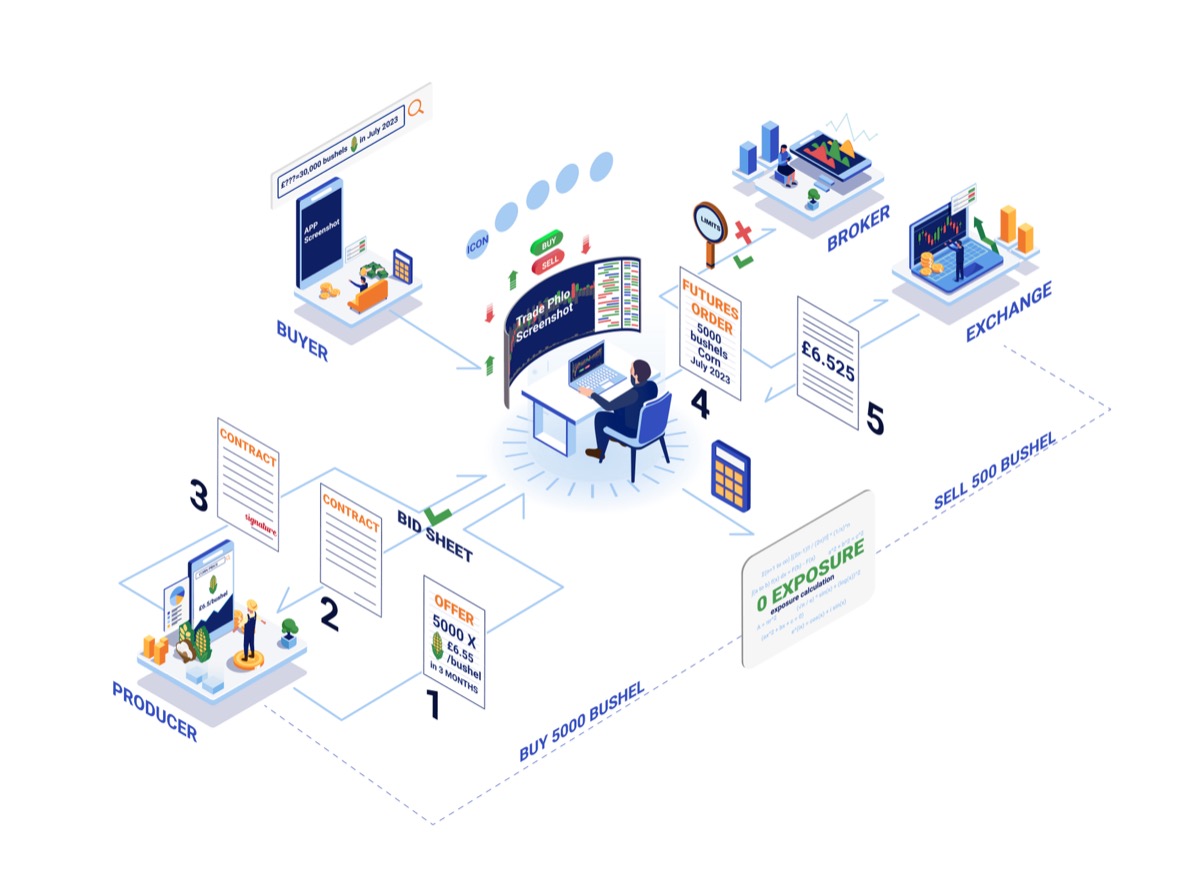
- Cloud-native on Acumatica. You get a Tier-1 cloud ERP — accounting, inventory, procurement, manufacturing, payroll — with a CTRM layer built natively on top. Trade capture, position, and P&L sit in the same system as the ledger, so there is no double entry and no reconciliation seam between trading and finance.
- Months to go-live, not years. A typical opsPhlo go-live is around four months. Torq Commodities migrated from Origin Commodities to opsPhlo in four months and scaled from 50 to 8,000 containers a year without adding back-office headcount.
- Auto-hedging with direct market access to CME, ICE, and DME, built in partnership with R.J. O'Brien, the oldest independent US futures brokerage, who endorse it publicly.
- Built for physical commodities across asset classes — currently live across cocoa, coffee, sugar, cotton, copper, aluminium, iron ore, and oil derivatives.
On cost, opsPhlo's customer benchmarks show roughly 93% lower five-year total cost of ownership than a comparable Tier-1 enterprise deployment (benchmarked against Triple Point) for equivalent scope — averaging around £330,000 saved a year.
The real difference: era, not checklist
Build a feature matrix and both systems will tick most of the same boxes — trade capture, positions, risk, confirmations. The matrix hides the decision. The real difference is what each platform assumes about your business:
- Aspect assumes a dedicated IT function, a multi-year budget, an existing ERP to integrate with, and the derivatives complexity of an energy major.
- opsPhlo assumes a lean physical-commodity trading house that needs the trading desk, the warehouse, and the finance team on one system, live this year, without a seven-figure implementation.
How to decide
- Large utility or oil major with deep, exotic derivatives and a dedicated ETRM team: Aspect (or its enterprise peers) is a legitimate fit.
- A £10M–£500M physical trader in agri, softs, or metals who has outgrown spreadsheets but cannot absorb an 18-month, £500K-plus implementation: opsPhlo is built for exactly this gap.
- Already running an excellent ERP and only replacing trading tools: a bolt-on can work. Want one system for trading and operations: a native platform removes the seam.
Where opsPhlo is not the right answer: super-majors with complex derivatives books, physical power and gas trading that needs deep grid integration, or firms committed to an on-premise model.
The bottom line
Aspect is a capable platform built for a different customer in a different decade. If you are a mid-market physical commodity trader, the honest question is not "which has more features" — it is "which era was this built for, and does it match how I need to go live." opsPhlo was built for the cloud era and the mid-market: it deploys in months and puts trading and the back office on one system.
If you would like to see it against your own trade flows, we can arrange a walkthrough and connect you with a reference customer such as Torq Commodities. Talk to us.
Phlo Systems is headquartered in the United Kingdom. Figures are indicative, drawn from customer benchmarks, and subject to scope.
Want to learn more about Phlo Systems?
See how our platform digitises international trade for commodity traders, importers, and exporters.
Get Started