Commodity Trade Finance Platform: Why £2.1B Trading Houses Abandon Legacy Systems
Mid-market commodity traders are switching from legacy trade finance systems after discovering 93% lower total cost of ownership. New data reveals why traditional platforms fail at scale.
A £150M metals trading house recently discovered they were paying 14 times more than necessary for trade finance technology. Their legacy platform charged £280,000 annually while delivering basic letter of credit tracking and manual reconciliation processes. After switching to a modern commodity trade finance platform, they reduced costs by 93% while processing £2.1B in annual trade volume with a team half the size.
This isn't an isolated case. Across 52 countries, mid-market commodity traders managing £10M-£500M in revenue are abandoning legacy trade finance systems that were built for a different era of global trade.
The Working Capital Crisis Hidden in Legacy Trade Finance Systems
Commodity trading companies lose an average of £330,000 annually to inefficient trade finance workflows, according to deployment data from 80+ implementations across coffee, metals, and agricultural sectors.
The problem starts with cash conversion cycles. A typical commodity trade involves 22 separate documents flowing between traders, banks, shipping lines, and customs authorities. Legacy trade finance platforms treat each document as a standalone event rather than components of an integrated financial workflow.
Consider Easy Access Trading, a Brazilian agribusiness operation that processes 400 commodity shipments annually. Before implementing modern trade finance automation, their finance team spent 40 hours monthly managing bank communications alone. Each facility creation required one full week of back-and-forth documentation. Cash flow forecasting relied on spreadsheets updated manually from seven different systems.
The financial impact was measurable: Days Sales Outstanding averaged 67 days, well above the industry benchmark of 45 days for agricultural commodities. Working capital tied up in trade cycles exceeded £2.3M during peak seasons.
Why Traditional ERP Finance Modules Fail at Commodity Scale
Generic ERP finance modules weren't designed for the complexities of international commodity trading. They lack three critical capabilities that commodity CFOs require:
First, multi-currency exposure management across volatile commodity markets. Coffee prices can swing 8% in a single trading session, while currency fluctuations add another layer of risk. Traditional systems calculate exposure at month-end, not in real-time during price discovery.
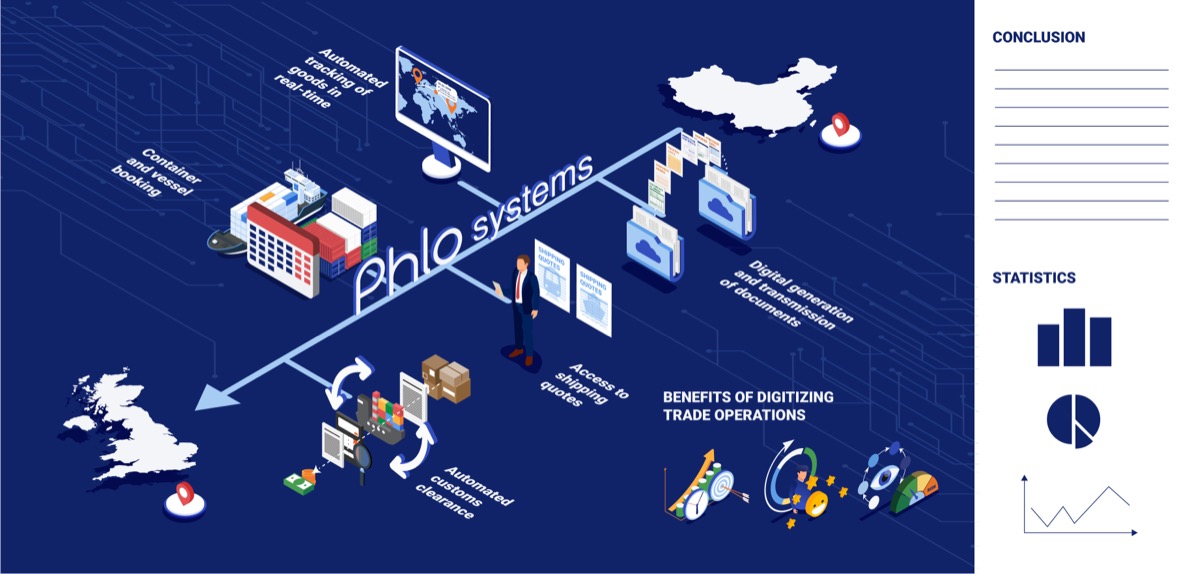
Second, trade finance instrument integration. Letters of credit, guarantees, and documentary collections require specific workflows that don't exist in standard accounting software. A Quadmet PTE analysis showed their previous system required 22 documents per trade, taking 12 hours of preparation time. Modern commodity trade finance platforms reduced this to 8 documents and 3.5 hours through automated document generation and bank API integration.
Third, counterparty credit monitoring across multiple jurisdictions. Commodity traders often extend credit to buyers in emerging markets where credit information changes rapidly. Legacy systems provide static credit limits set quarterly. Purpose-built platforms monitor real-time exposure across all open positions, factoring in commodity price movements and currency fluctuations.
Real-Time Cash Flow Forecasting: The Competitive Advantage
Accurate cash flow forecasting separates profitable commodity traders from those struggling with liquidity gaps. Traditional trade finance systems provide historical reporting, not predictive analytics.
Modern commodity trade finance platforms integrate with shipping schedules, commodity exchanges, and banking APIs to forecast cash flows with 94% accuracy across 30-day windows. This precision enables CFOs to optimize working capital deployment and reduce facility costs.
Torq Commodities scaled from processing 50 containers annually to 8,000 containers while maintaining the same finance team size. Their secret wasn't hiring more people – it was implementing automated trade finance workflows that reduced contract processing from 4-5 hours to 30 minutes.
The operational metrics tell the story:
- Invoice processing: 16 hours reduced to 30 minutes
- Inventory reconciliation: 22 hours reduced to real-time automation
- Contract amendments: same-day processing versus 3-day delays
Integration Requirements: Why Standalone Solutions Create More Problems
Commodity trade finance doesn't operate in isolation. It connects to physical operations, risk management, and regulatory compliance. Standalone finance platforms create data silos that force manual reconciliation between systems.
Effective commodity trade finance platforms integrate with:
- CTRM systems for position and exposure data
- Customs software for duty calculations and border compliance
- Shipping platforms for logistics coordination
- Banking APIs for real-time facility utilization
- Exchange connections for mark-to-market valuations
Chocomac Ghana, processing 60,000 metric tons of cocoa annually, required integration across three continents. Their finance platform needed to handle USD pricing, EUR banking facilities, and GHS local payments while maintaining regulatory compliance in Ghana, Netherlands, and the UK. The deployment took four months, resulting in 45% operational efficiency improvement.
Cost Comparison: Legacy vs Modern Platforms
Total cost of ownership calculations reveal why commodity traders are switching platforms. Legacy systems carry hidden costs beyond license fees:
Legacy Platform Costs (annual):
- Software licensing: £180,000-£350,000
- Implementation consulting: £120,000-£200,000
- Maintenance and support: £45,000-£80,000
- Custom development: £60,000-£150,000
- Training and change management: £25,000-£50,000
Modern Platform Costs (annual):
- SaaS subscription: £89,000-£189,000
- Implementation: £25,000-£45,000
- Ongoing support: included in subscription
- Upgrades: automatic, no additional cost
- Training: self-service and included support
The 93% total cost of ownership reduction compared to ION Trading, Triple Point, and Brady PLC comes from eliminating custom development requirements and reducing implementation timelines from 12-18 months to 4 months average.
Implementation Strategy: Avoiding the 73% Failure Rate
Mid-market CTRM implementations fail 73% of the time, often because companies underestimate trade finance integration complexity. Successful deployments follow three principles:
Phase 1: Core Trade Finance Operations (Months 1-2) Implement letter of credit management, payment processing, and basic reporting. This provides immediate workflow improvements while building user confidence.
Phase 2: Risk and Exposure Management (Month 3) Add real-time counterparty monitoring, currency exposure tracking, and automated facility utilization reporting. This phase typically delivers the highest ROI.
Phase 3: Advanced Analytics and Integration (Month 4) Connect to external systems, implement predictive cash flow forecasting, and activate automated compliance reporting.
This phased approach reduces risk while delivering measurable benefits at each stage.
The Strategic Decision Framework
CFOs evaluating commodity trade finance platforms should assess four critical factors:
- Integration depth: Can the platform connect to your existing CTRM, customs, and banking systems without custom development?
- Scalability proof: Has the vendor processed similar trade volumes in your commodity sector?
- Regulatory coverage: Does the platform handle compliance requirements in all your operating jurisdictions?
- Total cost transparency: Are implementation costs, training requirements, and ongoing fees clearly defined?
The commodity trading industry is consolidating around platforms that integrate trade finance with physical operations. Companies that delay this transition will face increasing competitive disadvantage as their manually-intensive processes become unsustainable at scale.
Modern commodity trade finance platforms aren't just about cost reduction – they enable the operational agility that mid-market traders need to compete with larger rivals while maintaining the responsiveness that differentiates them from institutional players.
Want to learn more about Phlo Systems?
See how our platform digitises international trade for commodity traders, importers, and exporters.
Get Started