
Foreign Exchange Risk in Trade Finance: Hedging Best Practices
Cross-border trade inherently carries foreign exchange risk, and the stakes have never been higher. Currency volatility has intensified dramatically since 2020, with emerging market currencies experie
Foreign Exchange Risk in Trade Finance: Hedging Best Practices
Cross-border trade inherently carries foreign exchange risk, and the stakes have never been higher. Currency volatility has intensified dramatically since 2020, with emerging market currencies experiencing swings of 20-30% annually. For trade finance professionals managing portfolios worth millions, a single unhedged position can wipe out months of margin.
The challenge isn't just volatility—it's the complexity of managing FX exposure across multiple currencies, counterparties, and time horizons while maintaining working capital efficiency. Traditional hedging approaches often fall short in trade finance because they're designed for simpler commercial transactions, not the intricate web of letters of credit, documentary collections, and supply chain financing that define modern international trade.
This guide examines how sophisticated trade finance operations approach FX risk management, from basic hedging mechanics to advanced strategies that integrate with broader working capital optimization. The goal isn't theoretical completeness but practical implementation—the techniques that actually work when you're managing real positions with real money at stake.
Understanding FX Risk in Trade Finance Context
Foreign exchange risk in trade finance differs fundamentally from standard corporate FX exposure. While a manufacturer might worry about translating overseas subsidiary earnings, trade financiers face transaction risk on steroids—dozens of currencies, varying settlement periods, and counterparty credit risk all layered together.
The primary categories of FX exposure in trade finance include transaction risk on open positions, translation risk when consolidating multi-currency portfolios, and economic risk from competitive effects of currency movements. Transaction risk typically dominates, representing 70-80% of total FX exposure for most trade finance operations.
Consider a typical letter of credit facility: the bank issues a USD-denominated LC for a UK importer buying from a Chinese exporter, with settlement in 90 days. The bank faces immediate exposure to GBP/USD movements on the underlying commercial risk, plus potential exposure to CNY/USD if local Chinese banking relationships are involved. Layer in documentary collection timing uncertainty, and the risk compounds.
Settlement timing adds another dimension. Unlike spot FX transactions, trade finance deals with documents, compliance verification, and payment processing that can extend settlement by days or weeks beyond expected dates. This "settlement creep" makes static hedging approaches problematic—your hedge might expire before your underlying exposure settles.
The interaction between credit risk and FX risk creates additional complexity. A counterparty's creditworthiness often correlates with their home currency's performance, particularly in emerging markets. When the Turkish lira collapsed in 2021, Turkish importers faced both FX losses and increased default probability simultaneously, creating losses that exceeded simple FX calculation.
Risk Assessment and Measurement Frameworks
Effective FX risk management starts with accurate measurement, but standard corporate treasury tools often miss trade finance nuances. Value at Risk (VaR) models, while useful for portfolio-level exposure assessment, struggle with the conditional nature of trade finance risks—an LC might or might not be drawn, documentary collections might face unexpected delays, and supply chain disruptions can accelerate or defer settlements unpredictably.
A practical measurement framework begins with exposure mapping across three time horizons: immediate (0-30 days), short-term (30-180 days), and medium-term (180-365 days). Most trade finance exposure concentrates in the short-term bucket, but the tail risk in medium-term exposures often carries disproportionate impact.
Daily exposure reporting should capture gross exposure by currency pair, net exposure after natural hedging, hedge ratios, and basis risk from imperfect hedges. Many operations find that natural hedging—matching exposures in opposite directions—covers 40-60% of gross exposure, but the residual requires active management.
Stress testing becomes critical given trade finance's exposure to emerging market currencies. Standard VaR models assume normal distributions, but currency crises follow fat-tailed distributions. The Turkish lira's 30% single-day drop in December 2021 exceeded 99.9% confidence intervals, yet similar events occur every few years somewhere in the global economy.
Scenario analysis should include currency devaluation stress (25-50% moves over 30 days), funding market stress (basis blowouts between major currency pairs), and correlation breakdown (historically uncorrelated currencies moving together during crisis). Building these scenarios requires understanding that trade finance operates in markets where central bank intervention, capital controls, and regulatory changes can invalidate historical relationships overnight.
Hedging Instruments and Strategies
Forward contracts represent the workhorses of trade finance FX hedging, but their application requires understanding the specific characteristics of trade finance cash flows. Unlike corporate treasury forwards with known settlement dates, trade finance forwards must accommodate document processing delays, compliance verification timing, and potential transaction cancellations.
Rolling hedges—systematically extending forward positions as settlement dates shift—address timing uncertainty but accumulate basis risk and transaction costs. A more sophisticated approach involves ladder hedging, where positions are hedged across multiple forward dates matching the probable settlement distribution. This reduces the need for rolling while maintaining hedge effectiveness.
Options strategies work particularly well for contingent exposures like undrawn credit facilities or pipeline deals with uncertain closing probabilities. A collar strategy—buying put options and selling call options—provides downside protection while generating premium income to offset hedging costs. For trade financiers managing dozens of potential deals, systematic collar programs can reduce hedging costs by 30-40% compared to outright forward hedges.
Currency swaps become relevant for operations with ongoing funding needs in multiple currencies. Rather than repeatedly hedging individual transactions, establishing swap lines allows natural matching of assets and liabilities by currency. This approach works particularly well for trade finance operations active in emerging markets where forward markets may be illiquid or expensive.
Exotic options—barriers, digitals, and structured products—occasionally make sense for specific exposures but generally add complexity without proportional benefit. The exception is emerging market operations where knockout options can provide cost-effective hedging for currencies with high volatility but low crash probability.
Dynamic hedging strategies adjust hedge ratios based on market conditions, volatility levels, and portfolio characteristics. While conceptually attractive, dynamic hedging requires sophisticated risk systems and active management resources that exceed most trade finance operations' capabilities. A static approach with quarterly rebalancing typically delivers 80% of the benefits at 20% of the complexity.
Technology and Automation in FX Hedging
Modern FX risk management relies heavily on technology, but many trade finance operations still manage exposures through spreadsheets and manual processes. This approach breaks down as portfolio complexity increases—tracking hundreds of positions across dozens of currencies exceeds human processing capability without systematic support.
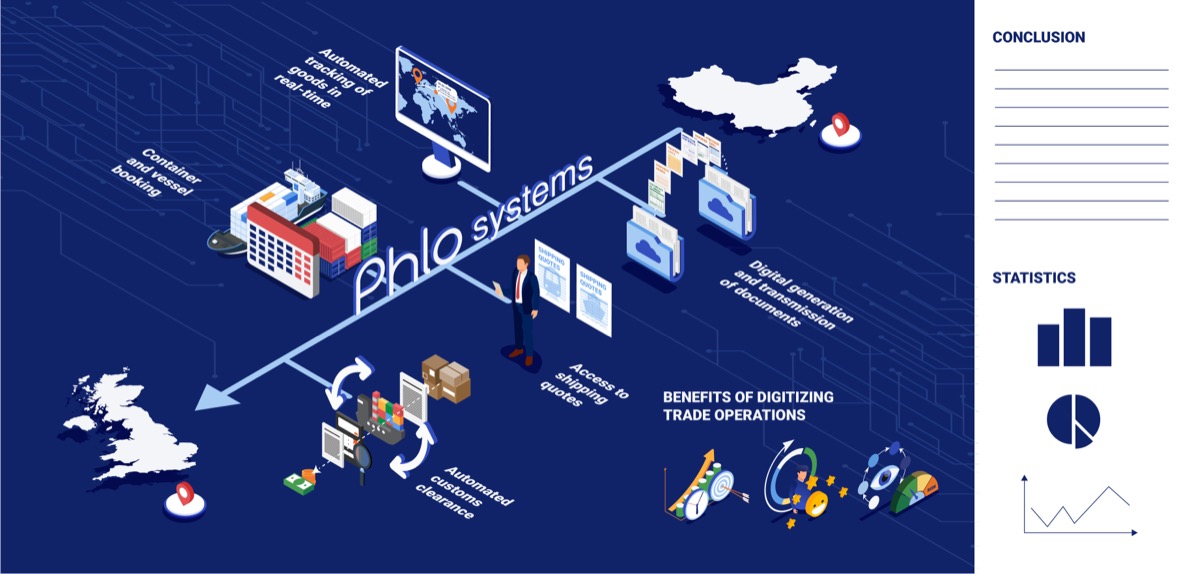
Integrated platforms like finPhlo automate the exposure identification and hedge recommendation process, connecting directly with trade finance management systems to capture positions as they originate. This real-time connectivity eliminates the lag between position origination and hedge execution that often creates unnecessary risk during volatile periods.
Automated hedging rules can execute standard hedges without manual intervention—forward contracts for exposures above defined thresholds, collar strategies for contingent exposures, and natural hedge identification across the portfolio. Automation ensures consistent hedge coverage and eliminates the operational risk of missed hedges during busy periods.
The integration with broader working capital optimization becomes crucial when hedge timing affects funding costs or customer terms. Systems that coordinate FX hedging decisions with inventory financing, receivables management, and payment timing optimization can improve overall returns by 15-25% compared to siloed approaches.
Real-time position monitoring and automated alerts enable proactive risk management rather than reactive damage control. When Turkish lira volatility spiked in 2021, operations with real-time monitoring systems identified at-risk positions and implemented additional hedging within hours, while manual processes took days to assess exposure and respond.
Integration with Working Capital Management
FX hedging decisions interact significantly with working capital management, yet most operations treat them separately. This separation misses opportunities for optimization and can create conflicts between risk management and liquidity objectives.
The timing of hedge settlements affects cash flow patterns and funding requirements. Poorly coordinated hedging can create artificial cash flow volatility that increases funding costs or requires additional credit facilities. Coordinated approaches match hedge settlements with underlying trade finance cash flows, reducing net funding requirements.
Currency selection for trade finance facilities creates natural hedging opportunities. Offering facilities in customers' home currencies eliminates customer FX risk while potentially creating beneficial netting opportunities for the financier. This approach requires sophisticated currency ALM but can reduce overall hedging costs while improving customer relationships.
The interaction between credit risk and FX risk management becomes apparent in currency-dependent credit limits and pricing. Operations sophisticated enough to integrate these considerations typically adjust pricing based on currency volatility and hedge costs, passing through the true economic cost rather than absorbing FX risk as a hidden subsidy.
finPhlo's working capital optimization capabilities demonstrate this integration in practice, automatically coordinating hedge timing with receivables collection schedules and payables management to minimize net funding requirements while maintaining hedge effectiveness.
Regulatory and Compliance Considerations
FX hedging in trade finance operates within a complex regulatory framework that varies significantly across jurisdictions. Basel III capital requirements affect the economics of hedge accounting, while MiFID II and similar regulations impose best execution requirements on hedge execution.
Documentation requirements for hedge accounting under IFRS 9 and US GAAP create administrative overhead but provide important protection during audits and regulatory examinations. Establishing hedge accounting policies upfront—before implementing hedging programs—avoids retrospective complications and ensures consistent treatment.
Cross-border operations face additional complexity from multiple regulatory regimes. A trade finance operation based in London but active in Asia might face UK FCA requirements, Hong Kong SFC regulations, and local requirements in each operating jurisdiction. Maintaining compliance across multiple regimes requires systematic tracking and regular legal review.
The regulatory treatment of cryptocurrency and digital assets creates new considerations for operations experimenting with blockchain-based trade finance solutions. While traditional FX hedging regulations don't directly address digital assets, the underlying economic risks require similar management approaches adapted for new asset classes.
Frequently Asked Questions
What percentage of trade finance exposure should typically be hedged?
Hedge ratios in trade finance typically range from 70-90% of net exposure after natural hedging. The exact percentage depends on risk tolerance, currency mix, and hedge costs. Operations focusing on major currency pairs (EUR, GBP, JPY) often hedge 80-85%, while those active in emerging markets might hedge 90-95% due to higher volatility. Complete hedging is rarely optimal due to hedge costs and basis risk.
How do forward points affect trade finance hedging costs?
Forward points—the premium or discount for settling FX at future dates—directly impact hedging costs and can significantly affect trade finance profitability. High-yielding currencies typically trade at forward discounts, making hedging expensive for long positions. For example, hedging USD exposure against Turkish lira historically costs 15-20% annually due to interest rate differentials. These costs must be incorporated into pricing models.
Should contingent trade finance exposures like undrawn credit lines be hedged?
Contingent exposures require probability-weighted hedging approaches. Undrawn credit facilities with 60% expected utilization might be hedged at 40-60% ratios using forward contracts, or fully hedged using options strategies. The optimal approach depends on utilization predictability, hedge costs, and risk tolerance. Options provide more precise risk management but cost more upfront.
How does settlement timing uncertainty affect hedge effectiveness?
Settlement timing uncertainty creates basis risk between hedges and underlying exposures. Document processing delays, compliance issues, and operational problems can shift settlement dates by days or weeks. Effective approaches include ladder hedging across multiple settlement dates, building settlement buffers into hedge timing, or using flexible forward contracts that allow settlement date adjustments.
What are the key differences between hedging trade finance vs. corporate treasury FX risk?
Trade finance FX hedging involves more currencies, shorter time horizons, greater settlement uncertainty, and stronger correlation between credit and FX risk. While corporate treasury might focus on EUR/USD exposure from overseas operations, trade finance operations typically manage 10-20 currency pairs with varying liquidity and volatility characteristics. The operational complexity requires more sophisticated systems and processes.
How do emerging market currency restrictions affect hedging strategies?
Capital controls and currency restrictions in emerging markets can prevent or delay hedge settlement, creating basis risk even with perfect hedge ratios. Effective strategies include hedging in proxy currencies (using USD/CNH instead of USD/CNY onshore), maintaining hedge buffers for restricted currencies, and incorporating regulatory risk into hedge effectiveness testing. Some operations maintain separate risk limits for restricted currencies.
Managing FX risk in trade finance requires sophisticated approaches that go beyond standard corporate treasury practices. The combination of multiple currencies, uncertain settlement timing, and correlation with credit risk demands integrated solutions that coordinate hedging with broader working capital management.
Technology plays an increasingly critical role in managing this complexity. Operations still relying on manual processes and spreadsheets find themselves at a significant disadvantage in both risk management effectiveness and operational efficiency.
If you're evaluating solutions for integrated trade finance and FX risk management, finPhlo offers comprehensive capabilities that coordinate hedging decisions with working capital optimization across the entire trade lifecycle. The platform's real-time connectivity and automated hedging recommendations can significantly improve both risk management and profitability—worth exploring at finphlo.com.
The key to successful FX risk management in trade finance isn't perfect hedging—it's building systematic, scalable processes that consistently manage risk while supporting business growth. Operations that master this integration typically outperform peers by significant margins while maintaining better risk-adjusted returns.
Want to learn more about Phlo Systems?
See how our platform digitises international trade for commodity traders, importers, and exporters.
Get Started