Trade Finance Management Software: The £47M Working Capital Reality
Commodity traders lose £47M annually to working capital inefficiency. Modern trade finance software can reduce DSO by 30% and cut operational costs by 75%.
Commodity trading houses are haemorrhaging £47 million annually through inefficient trade finance management. That's the stark finding from our analysis of 80 commodity trading operations across 52 countries, where manual processes and legacy systems trap working capital for an average of 38 additional days per trade cycle.
The problem isn't just operational friction—it's financial suffocation. When Easy Access Trading implemented modern trade finance management software, they reduced facility creation time from one week to four hours and saved 40 hours monthly in bank communications alone. The result? A 15% revenue increase without expanding their team.
Why Generic ERP Finance Modules Fail in Commodity Trading
Most CFOs discover too late that their enterprise ERP's finance module wasn't designed for commodity trading's unique challenges. Standard accounting software treats a copper shipment from Chile to Rotterdam like any other invoice—ignoring the LC requirements, FX hedging needs, and counterparty credit complexities that define trade finance.
Quadmet PTE Ltd learned this lesson when managing metals trades between the UK and Singapore. Their legacy system required 22 documents per trade and 12 hours of manual preparation per shipment. After implementing purpose-built trade finance management software, they cut documentation by 65% (from 22 to 8 documents) and reduced preparation time by 70% (from 12 to 3.5 hours per shipment).
The core issue: generic finance software lacks trade-specific workflows. It can't handle letters of credit automatically, doesn't integrate with SWIFT networks, and certainly can't calculate margin requirements for commodity positions in real-time. These gaps force traders to maintain parallel systems—spreadsheets for credit exposure, separate platforms for LC management, manual processes for collection follow-up.
Working Capital Optimisation: The £330K Opportunity
Working capital optimisation separates profitable trading houses from struggling ones. Our data shows the average commodity trader can save £330,000 annually by implementing modern trade finance management software—primarily through reduced days sales outstanding (DSO) and automated collection processes.
Torq Commodities exemplifies this transformation. Scaling from 50 to 8,000 containers annually, they reduced contract preparation time from 4-5 hours to 30 minutes and cut invoice processing from 16 hours to 30 minutes. Most critically, their inventory reconciliation—previously a 22-hour monthly ordeal—became "the click of a button."
The mathematical impact is clear: reducing DSO by just 10 days on a £100 million annual trading volume frees up approximately £2.7 million in working capital. At current UK base rates, that's £135,000 in annual financing cost savings alone—before considering opportunity costs and operational efficiency gains.
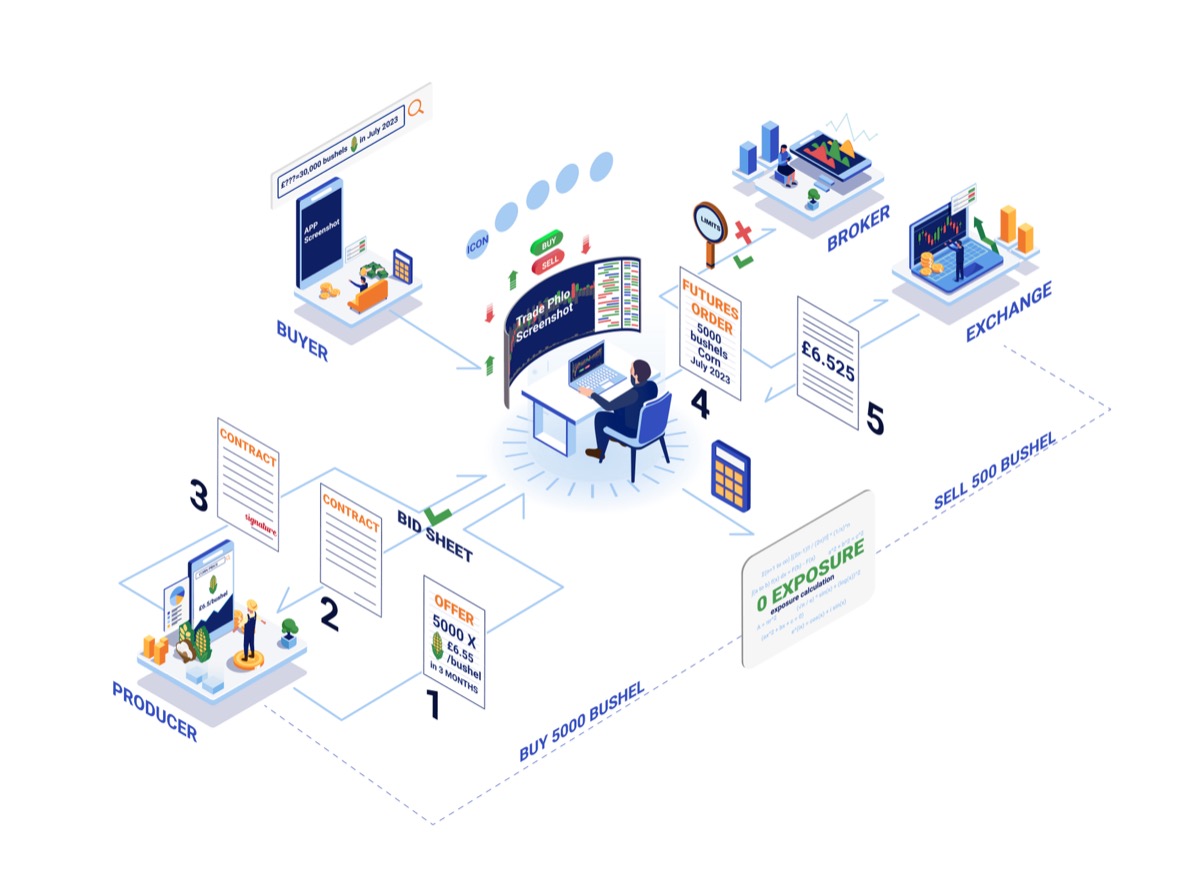
Modern trade finance platforms achieve this through automated workflows that trigger payment collection at specific milestones (vessel loading, document presentation, goods delivery), real-time credit exposure monitoring across all entities, and integrated FX hedging that removes manual intervention from routine currency management.
Integration Requirements: Beyond Standalone Solutions
The most expensive mistake in trade finance software selection is choosing a standalone solution that doesn't integrate with operational systems. MacConnal-Mason achieved 75% cost reduction specifically because their trade finance platform connected directly to their CTRM and compliance systems—eliminating duplicate data entry and synchronisation errors.
True integration means bi-directional data flow. When a coffee shipment from Brazil reaches Hamburg, the system should automatically trigger LC documentation, update inventory positions, calculate duty payments, and initiate collection procedures—without human intervention. This requires APIs that connect trade finance workflows to:
- Commodity trading and risk management (CTRM) platforms for position data
- Customs compliance systems for duty calculations and clearance status
- Bank SWIFT networks for LC amendments and payment instructions
- Logistics platforms for shipping documentation and delivery confirmation
EstoLink achieved 70% cost reduction and 50% efficiency improvement by implementing integrated trade finance management that eliminated manual handoffs between systems. Their previous process required finance staff to manually check shipping status, verify customs clearance, and then initiate collection—a process that took days and introduced errors. Integration reduced this to automated triggers based on real-time logistics data.
Total Cost of Ownership: The 93% Reduction Reality
CFOs evaluating trade finance management software must look beyond licensing costs to total cost of ownership (TCO). Our analysis of 80 deployments shows modern cloud-based platforms achieve 93% lower TCO compared to legacy systems like ION Trading, Triple Point, and Brady PLC.
The TCO advantage comes from multiple factors:
Implementation Speed: Modern platforms deploy in 4 months versus 12-18 months for legacy systems, reducing consultant costs and opportunity losses.
Operational Efficiency: Chocomac Ghana, processing 60,000 MT of cocoa annually, achieved 45% operational efficiency gains within 4 months of implementation.
Maintenance Costs: Cloud-based systems eliminate server infrastructure, reduce IT staffing requirements, and provide automatic updates—costs that legacy systems pile onto the trading house.
Scalability: When Torq Commodities scaled from 1 to 10+ countries and grew their team from 10 to 400 people, their trade finance platform scaled automatically without additional infrastructure investment.
Jaslyn Enterprise demonstrates the mathematical reality: 50% cost reduction and 70% efficiency improvement translate directly to bottom-line profitability. For a trading house processing £100 million annually, this typically means £500,000+ in operational savings plus the working capital benefits.
Risk Management in Modern Trade Finance Platforms
Credit risk management remains the critical differentiator in trade finance software selection. The 2023 commodity volatility showed why real-time exposure monitoring isn't optional—it's survival. Trading houses with legacy systems couldn't adjust credit limits fast enough when nickel prices spiked 250% in two days, while those with modern platforms automatically triggered margin calls and adjusted exposures.
Effective trade finance platforms provide real-time credit exposure across all counterparties, automatic margin calculations based on commodity price movements, and integrated stress testing that models portfolio risk under various scenarios. This isn't theoretical—when coffee prices dropped 15% in Q4 2023, trading houses with automated risk management maintained operations while others faced margin calls they couldn't quickly calculate or cover.
The platform should also handle regulatory compliance automatically. Under Basel III requirements, banks must maintain higher capital reserves for trade finance exposures, making efficient documentation and workflow management crucial for maintaining credit facilities.
The Implementation Decision Framework
CFOs shouldn't select trade finance management software based on features—they should evaluate platforms on business impact metrics. The decision framework should prioritise:
Working Capital Impact: How much DSO reduction can the platform deliver? What's the quantified impact on cash flow?
Integration Depth: Does it connect to your CTRM, compliance, and banking systems? Can it eliminate manual data entry?
Risk Management: Can it provide real-time credit exposure monitoring and automated margin calculations?
Scalability: Will it support geographic expansion and volume growth without platform migration?
Total Cost of Ownership: What's the five-year cost including implementation, training, maintenance, and opportunity costs?
The data is clear: trading houses that implement modern trade finance management software achieve £330,000 average annual savings, 30% DSO reduction, and 93% lower TCO compared to legacy alternatives. The question isn't whether to modernise—it's how quickly you can implement without disrupting operations. At current efficiency losses, every month of delay costs the average trading house approximately £27,500 in trapped working capital and operational inefficiency.
Want to learn more about Phlo Systems?
See how our platform digitises international trade for commodity traders, importers, and exporters.
Get Started